


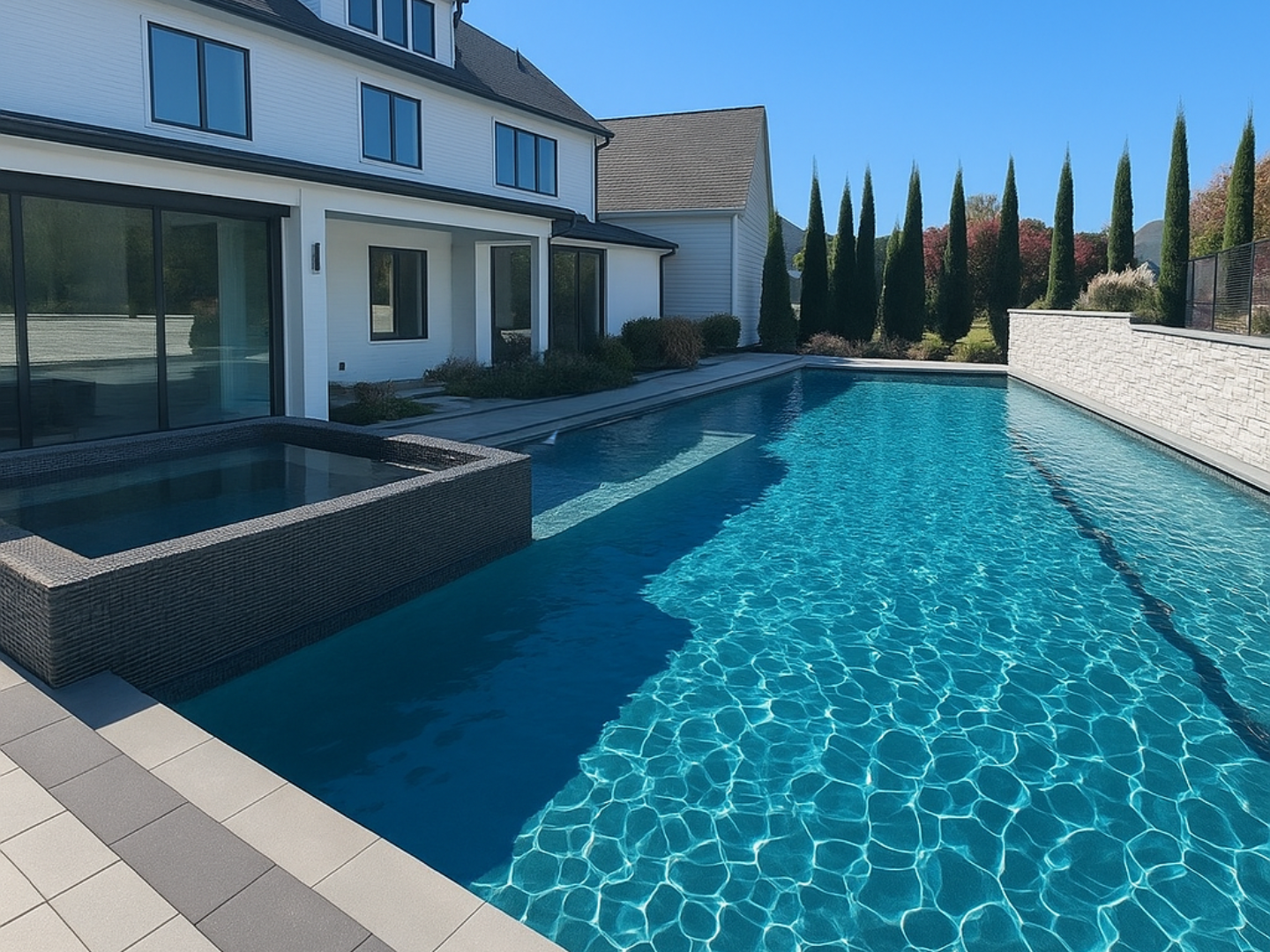
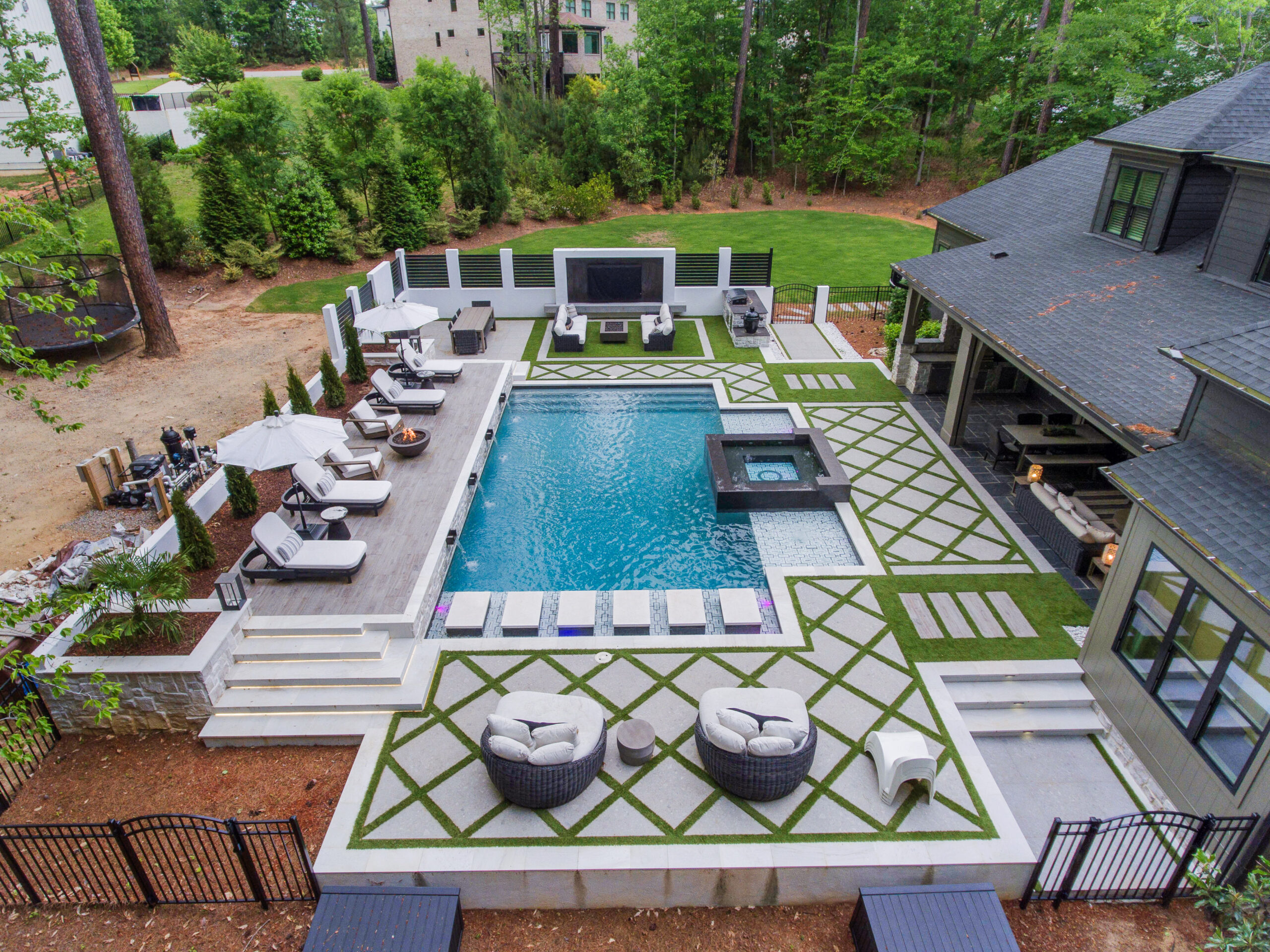
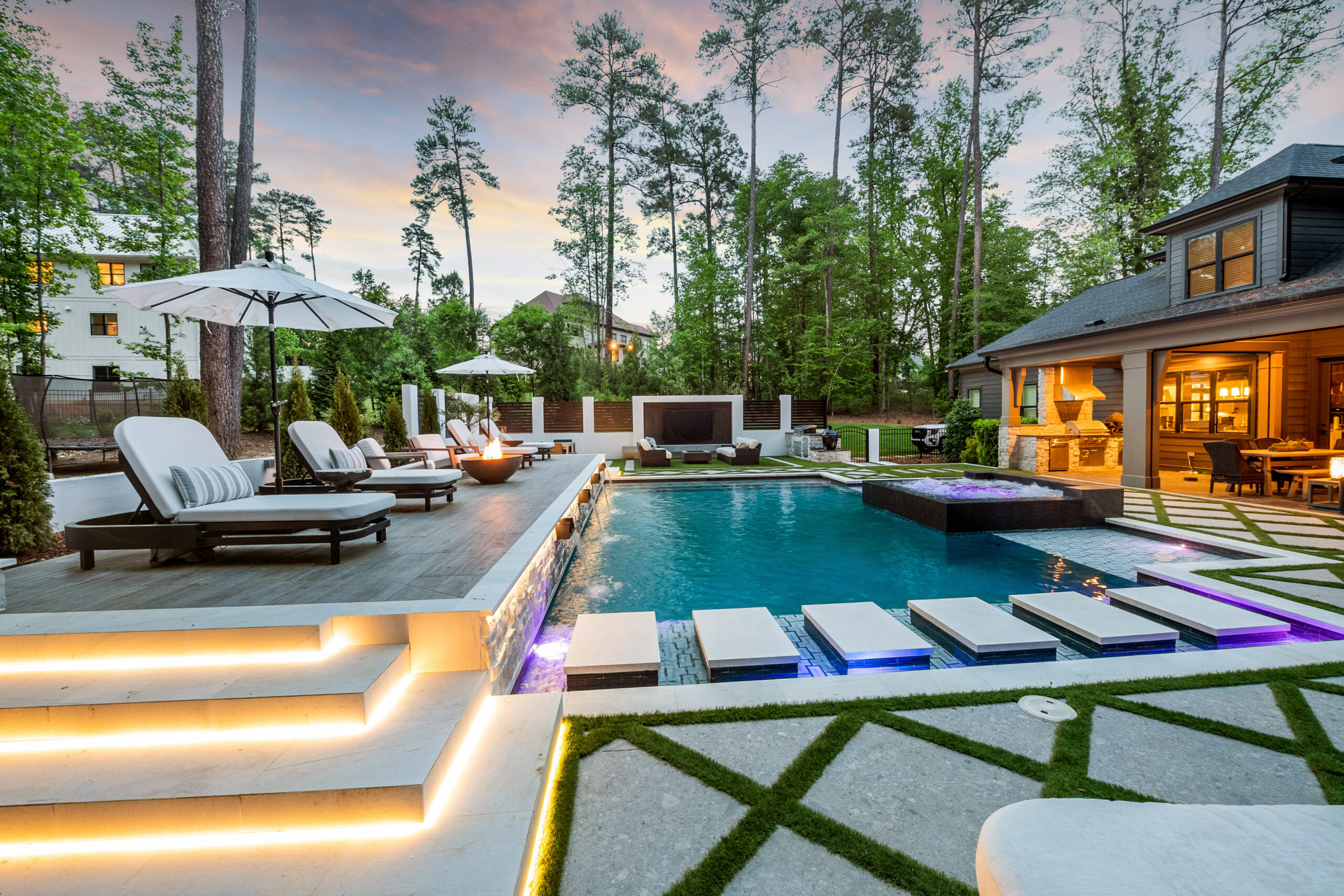
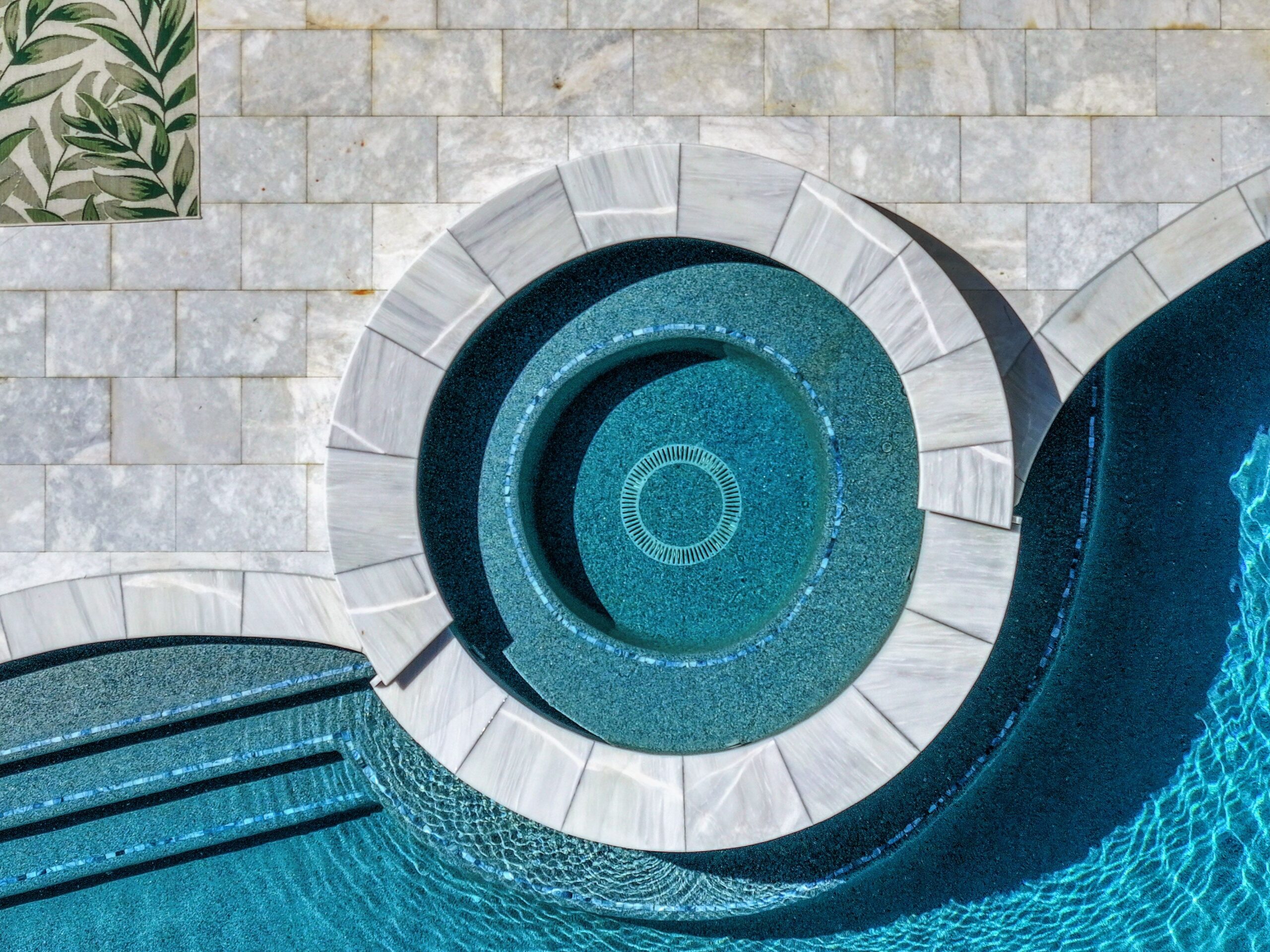
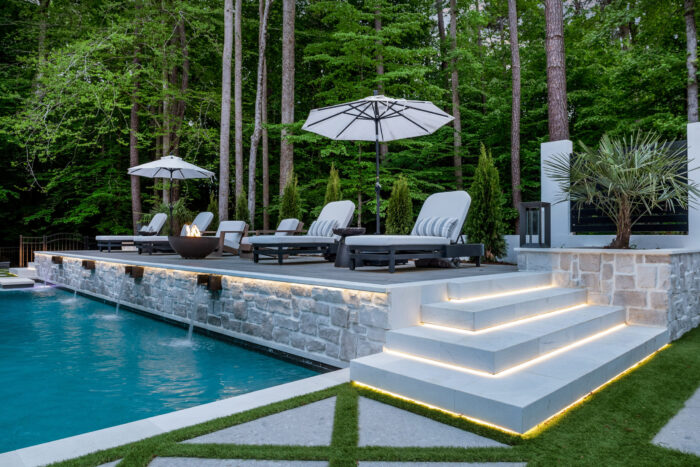
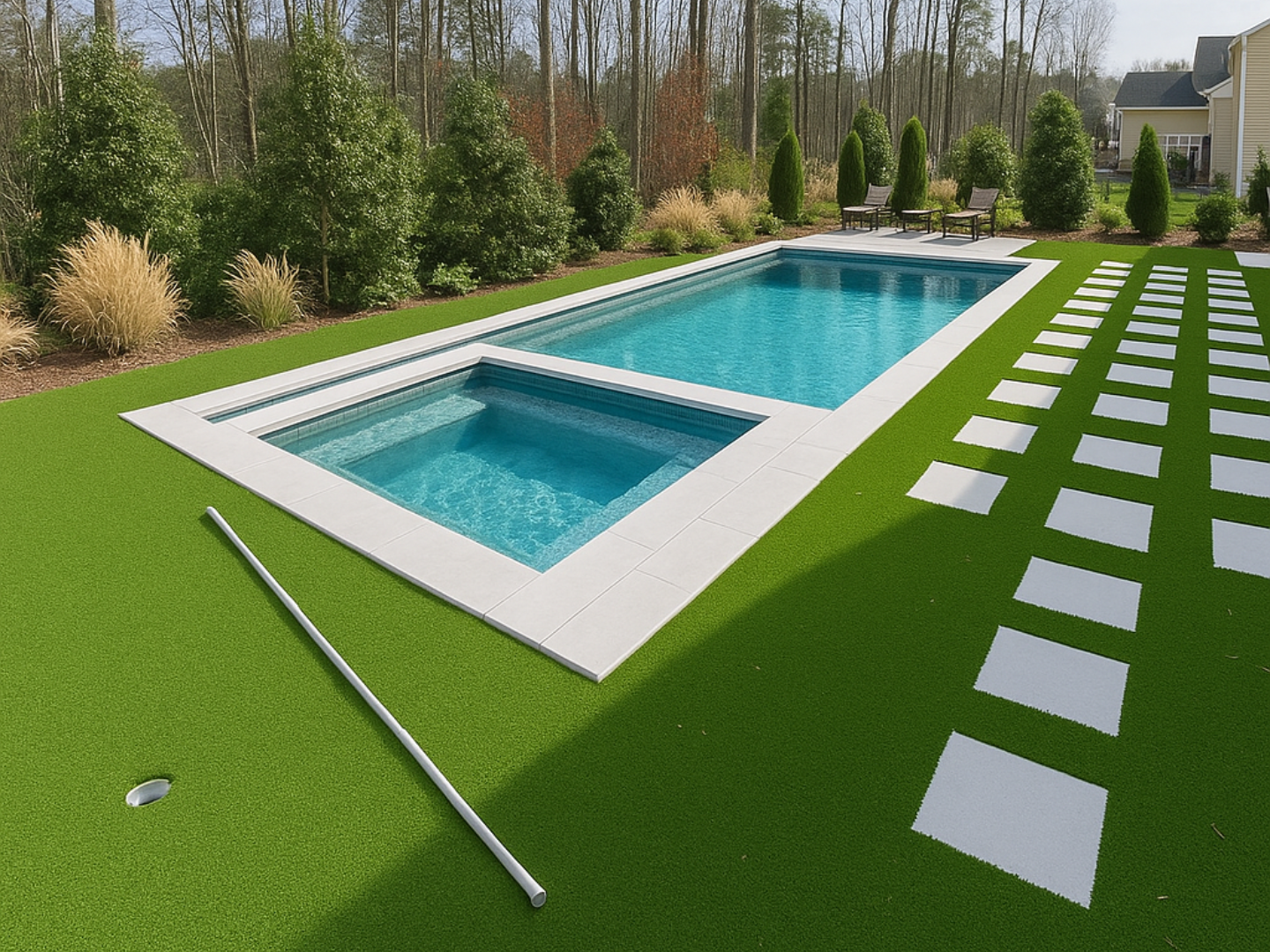
Wondering if you can recreate pool design inspiration you found online? It starts with a screenshot, or a saved Instagram post. Maybe a Houzz album with a dozen images from a property in Scottsdale or a resort in Palm Beach. You have been collecting images for months, and somewhere in that collection is the pool that made you stop scrolling.
That image is not a problem. It is information and for the homeowners who bring that inspiration into a design conversation, it is often the clearest shortcut to the backyard they actually want. The question of how to recreate pool design inspiration you found online is the right one to ask early, because the answer shapes how the design conversation goes and what becomes possible on your specific lot.
For homeowners in Cary, Durham, and Chapel Hill considering a custom pool, this guide explains which elements of an inspiration design transfer directly, which must be adapted for your lot, and why the customization process almost always produces something better than the original image.

Why Inspiration Images Are a Design Starting Point, Not a Blueprint
The pool in the image was designed for a specific lot, a specific orientation, a specific soil condition, and a specific local building code. It was photographed in a specific season, at a specific time of day, with specific landscaping that took years to grow in. Some of what you love about it is the design. Some of what you love about it is the photograph.
A skilled design-build partner can separate those two things quickly. What proportion is the pool relative to the yard? What is the relationship between the water surface and the surrounding deck? Where is the sun coming from, and what does that mean for how the space will feel at different times of day? These structural questions sit behind what you are visually attracted to.
The inspiration image is the fastest way to communicate those structural preferences and the clearest way to recreate pool design intent without having to describe it from scratch.. Showing a designer the pool you want is more precise than trying to describe in words that you want a clean edge, a larger surface area relative to the deck, and a tanning shelf on the south side. The image carries all of that information simultaneously.
What Can Be Replicated Directly
When you set out to recreate pool design elements from an inspiration image, most of them are achievable when the project is handled by an experienced custom builder.
Pool shape and proportion are among the most directly transferable elements. Rectangular, freeform, geometric, and L-shaped pools are all established construction forms. If your lot accommodates the footprint, the shape can be matched closely.
Water features are similarly replicable. Vanishing edges, sheer descent water walls, deck jets, raised spillover spas, and natural-rock waterfalls are all established construction techniques. If it was built once, it can be built again with the right team.
Coping and tile detail transfer through specification. The material and profile of the pool coping, the waterline tile, and any in-pool mosaic work are selections that a designer can identify from a reference image and source an equivalent or superior version for your project.
Deck material and layout also transfer. If the inspiration pool has a travertine deck with large-format pavers, yours can too. The specification exists; it is a question of matching it to your home and your budget.
Architectural pool lighting, including color-changing LED systems, submerged linear lights, and deck-embedded spotlights, is available and increasingly part of the standard specification for custom pools in Chapel Hill, Durham, and Cary.

What Has to Be Engineered for Your Lot
Some elements of an inspiration design will not transfer directly because they depend on conditions specific to the original site.
Proportions relative to yard size are the first adjustment. If the pool in the image sits in a half-acre flat lot and your lot is 8,000 square feet with mature trees, the pool can capture the same character but will be calibrated to your context. A designer scales the proportion so your finished pool feels right in your yard, not like a reduced copy.
Setbacks and zoning are non-negotiable local constraints. Every municipality in the Triangle has pool setback requirements from property lines, easements, and structures. In Cary, Durham, and Chapel Hill, these requirements vary. A design-build partner who knows the local code works around them proactively, often finding solutions that preserve the design intent.
Drainage and grading reflect your site’s specific conditions. The drainage design for the original pool reflects the natural grade and soil conditions of that lot. Your lot drains differently. Getting drainage right from the engineering phase protects your investment and your yard for the lifetime of the pool.
Soil and structural conditions are invisible in the inspiration image but shape the construction specification significantly. Expansive clay soils common in parts of the Triangle require specific structural decisions in pool shell engineering. Industry best practice notes that site-specific soil analysis is a standard part of responsible pool construction precisely because structural requirements vary so significantly by location.
How Customization Elevates the Design
Here is what most inspiration-driven buyers discover in the design process: the pool they end up building is better than the one in the screenshot.
That is no coincidence. When a design is adapted to your specific lot, your home’s architecture, your family’s use patterns, and your material preferences, it becomes a design that belongs to that place. The inspiration image is the spark. The custom design is the fire.
A tanning shelf positioned to catch morning sun on your specific lot. A coping material that pulls from your home’s brick and extends it to the water edge. A deck layout that opens the sightline from your kitchen to the pool. A water feature positioned where the afternoon wind carries the sound toward the patio. These are not compromises away from the inspiration. They are the inspiration realized in the actual place where you live.
This is what it means to truly recreate pool design inspiration in Cary, Durham, and Chapel Hill. Not selecting from a catalog of existing designs, but using inspiration as a starting point and building something that could only exist in that specific backyard, behind that specific home.

What to Bring to the Design Conversation
You do not need to have every detail figured out before reaching out. A folder of five to fifteen inspiration images that capture what genuinely excites you is enough to start a productive design conversation. What matters is that the images reflect authentic preference, not what you think you are supposed to want.
A useful set of inspiration images includes pools that appeal to you for different reasons: one you love for the shape, one for the material palette, one for the water feature, one for how it integrates with the outdoor kitchen or patio. That variety gives a designer far more to work with than twelve images of the same style.
You can also note what you do not want. That information is equally useful in helping a designer calibrate the direction quickly and avoid investing time in options that do not fit.
Your Inspiration Is the Right Starting Point
Every effort to recreate pool design inspiration starts the same way at Jim Hinson Pools: someone says, here is what I am imagining. The design process is the translation. It turns what you are drawn to into something that works on your specific lot, in your specific climate, alongside your specific home.
The image you saved is not a limitation. It is the clearest thing you know about what you want. That is the best possible place to start.
Share your inspiration with the Jim Hinson Pools design team and we will map a plan for bringing it to life. Schedule a custom pool design consultation to start the conversation.