


Close your eyes for a moment and imagine the sound. A thin, glassy sheet of water falling from a raised wall into the pool below. Or the steady pour of a scupper across natural stone. Or the quiet, rhythmic bubbling from the shallow end where the children are playing. Each of these sounds belongs to a different pool, and each tells a different design story.
Pool water features are among the most evocative elements in luxury backyard design. They are not just visual. They are sensory. The right water feature shifts the character of a space, creates a focal point, and adds the kind of ambient sound that makes an outdoor environment feel alive rather than static.
For homeowners in Cary, Durham, and Chapel Hill planning a custom pool, the question is not whether to include a water feature. It is which one, or combination, is right for the design. This guide walks through the three most common options in Triangle luxury builds: sheer descents, scuppers, and bubblers.

Sheer Descents: Precision and Modern Elegance
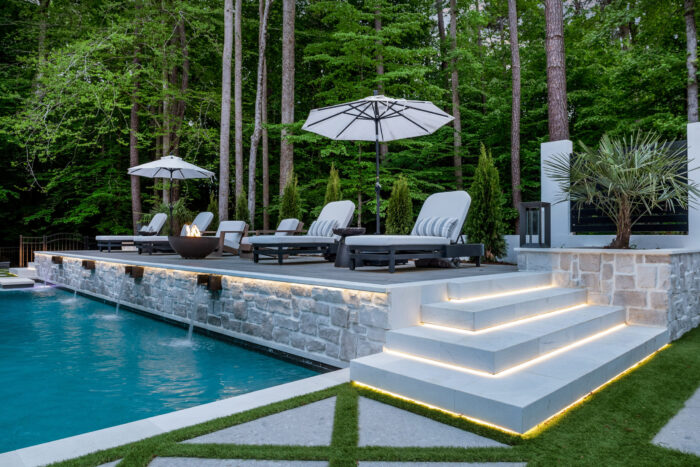
A sheer descent produces a thin, unbroken sheet of water that falls from a fixed head mounted in a raised wall or beam into the pool below. The result is architectural in character: clean, precise, and visually striking in the way a natural-style waterfall is not. Where a rock waterfall suggests texture and movement, a sheer descent suggests discipline and craft.
Sheer descents are among the most popular water features in contemporary and transitional pool designs across the Triangle. They pair naturally with the clean geometry of modern home architecture, common in neighborhoods like downtown Durham’s newer developments and the higher-design pockets of Cary, and create a glass-like curtain of water that catches both natural and artificial light beautifully.
Key design considerations include wall height, with most sheer descents working best at a drop between 18 and 36 inches; the number of heads, with single or paired descents most common in residential builds; and LED lighting integration, which allows the water sheet to be lit from within for a particularly compelling nighttime effect.
Scuppers: Architectural Volume and Warmth
A scupper is an opening, typically a rectangular or square cutout, in a raised wall through which water flows and pours into the pool below. The effect is warmer and more organic than a sheer descent: water moves in a defined arc rather than a flat sheet, and the pour has a richer, more audible sound.
Scuppers are highly adaptable. They work in formal, transitional, and contemporary designs depending on how the surrounding wall is finished. A raised spa wall clad in smooth stucco with three flush-mounted scuppers reads as modern. The same scuppers in a wall finished with natural stone and travertine take on a Mediterranean or resort character. The water feature itself is less important than how the materials frame it.
For raised spa designs where an elevated spa spills into the main pool, scuppers offer a particularly elegant solution. The pour height and width can be customized to achieve a specific sound level and visual weight. In a quiet residential backyard in Chapel Hill’s Governors Club or Durham’s Hope Valley, a well-placed scupper becomes the ambient soundtrack for every evening outdoors.
Bubblers: Family Use and Quiet Animation
Bubblers are installed in the floor of a tanning ledge or shallow area and produce a gentle, upwelling jet of water. The effect is quiet, soft, and functional: children are drawn to the movement and sound, adults appreciate the tactile experience, and the visual animation they create in shallow water is surprisingly compelling.
As a standalone water feature, bubblers are most appropriate for pools where tanning ledges are the primary feature and the overall design aesthetic is clean and restrained. They do not compete with the architecture of the pool. They enhance the experience of a specific zone within it.
Bubblers work well as part of a layered water feature strategy: a sheer descent or scupper at the pool’s perimeter creates visual and auditory drama, while bubblers in the tanning ledge create a quieter, more tactile counterpoint in the shallow end.
A Quick Comparison: Which Feature Fits Your Backyard
| Feature | Best For | Sound Profile | Architectural Style |
|---|---|---|---|
| Sheer Descent | Raised walls, modern design | Soft, steady | Contemporary, transitional |
| Scupper | Raised spa walls, formal pools | Richer, more audible pour | Modern, transitional, resort |
| Bubbler | Tanning ledges, family pools | Quiet, ambient | Any style |
How Features Work Together: The Layered Approach
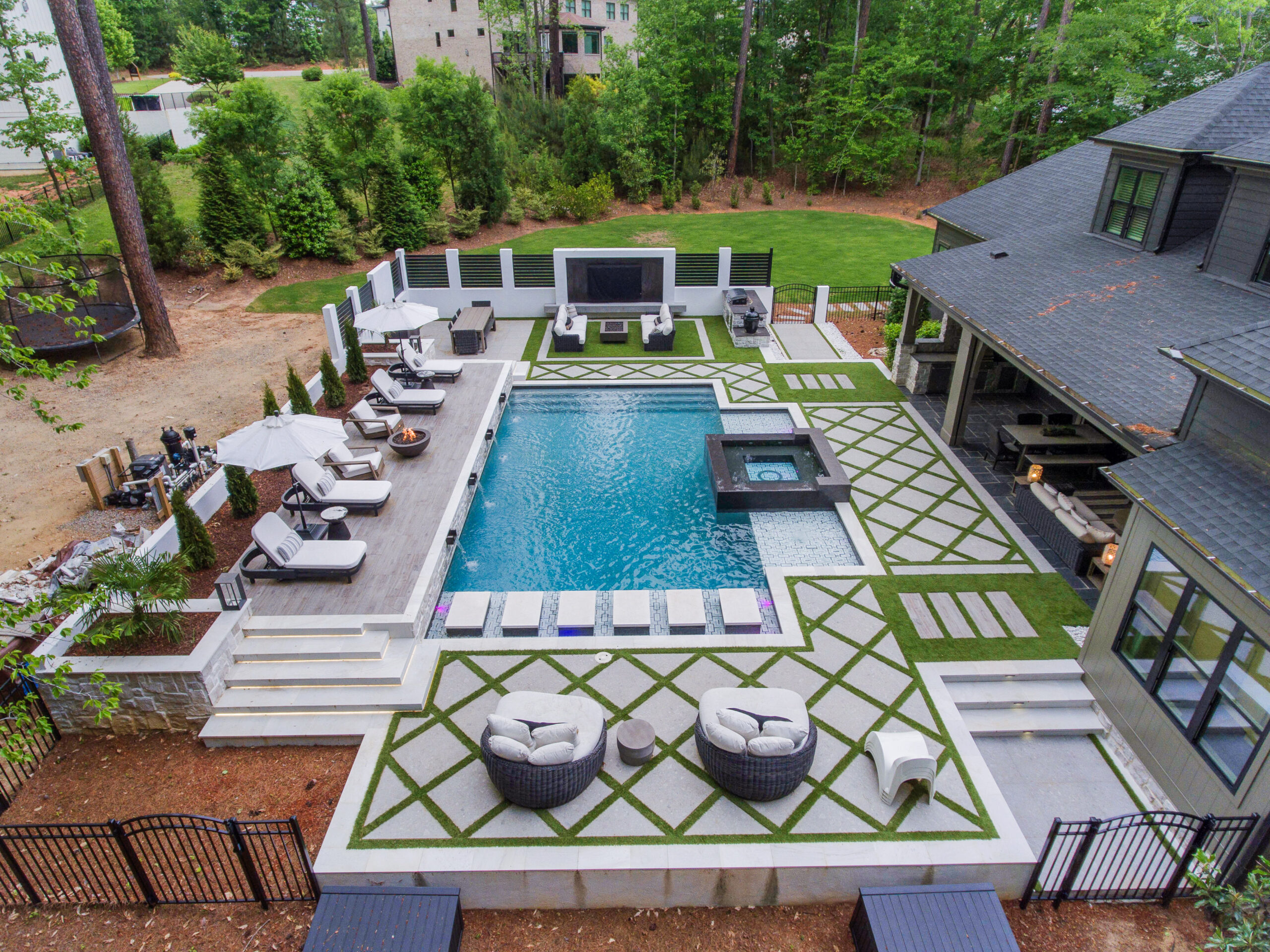
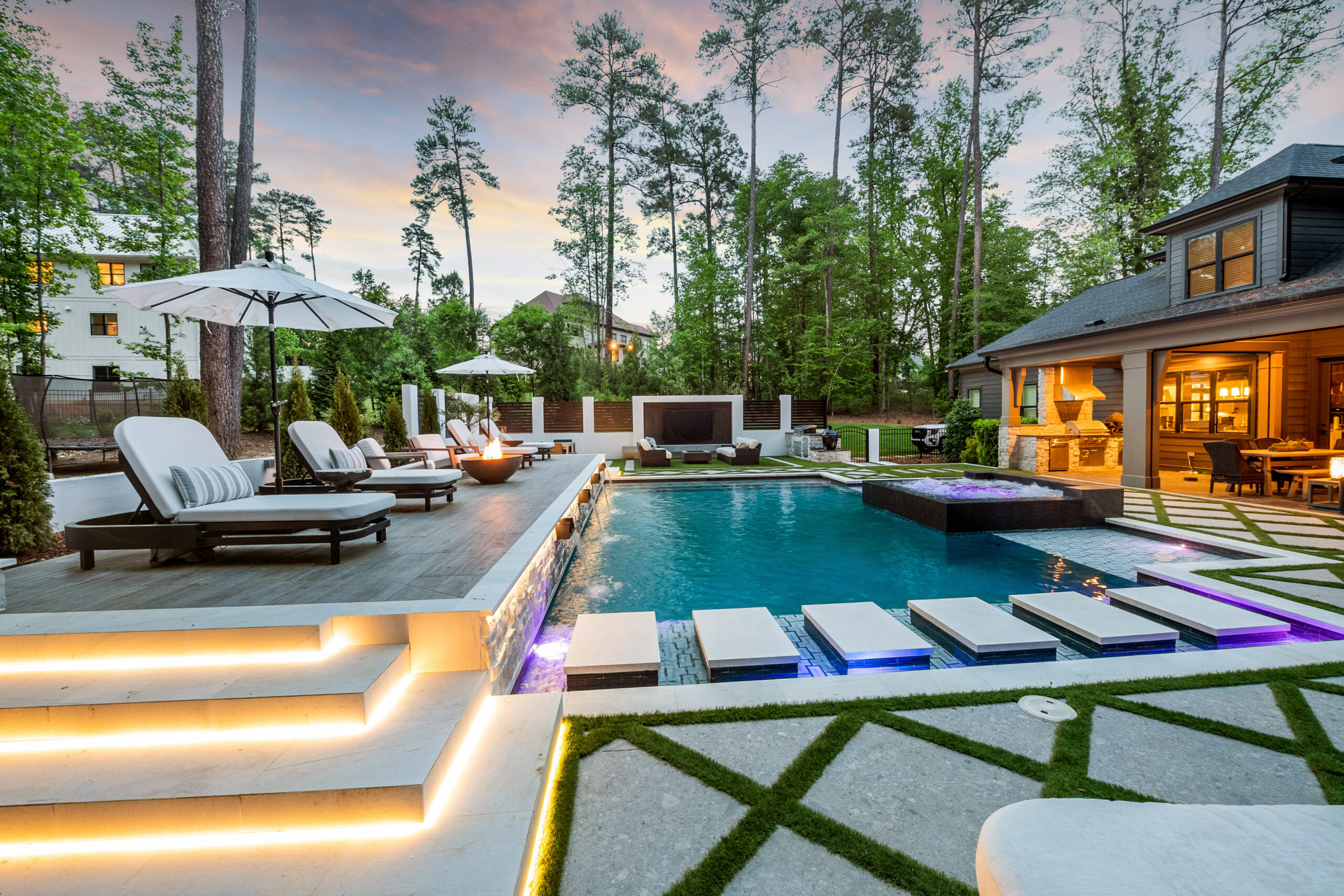
The most compelling luxury pools in the Triangle do not rely on a single water feature. They layer. A sheer descent on the pool’s back wall creates a visual anchor. A scupper on the raised spa wall adds a secondary sound element at a different pitch and volume. Bubblers in the tanning ledge create tactile animation in the shallow end.
When features are integrated at the design stage, they can all be tied into the pool’s automation system, controlled independently or as part of a single programmed scene. Activating an evening entertaining scene might bring up the LED lighting, start the sheer descents, and warm the spa simultaneously. That level of integration requires planning from the beginning, not retrofitting.

Maintenance Reality: What Each Feature Requires
All water features operate from the pool’s existing circulation system and require minimal dedicated maintenance beyond a few practical considerations. Sheer descent heads and scupper openings should be checked periodically for mineral buildup or debris that can break up the water sheet or pour arc. If LED lighting is integrated into sheer descents, bulbs and seals should be inspected annually. In North Carolina’s climate, water features require proper winterization each fall to prevent freeze damage to lines, which is standard practice for any pool service provider.
Water, Sound, and the Character of a Space
The choice between a sheer descent, a scupper, and a bubbler is ultimately a design conversation, not a product selection. What matters is how each feature contributes to the sensory environment you want your backyard to create and how it integrates with the architecture of the pool and home.
At Jim Hinson Pools, water features are designed in context, not selected from a catalog. Each feature’s placement, proportion, and material integration is considered as part of the whole, which is what makes the difference between a pool that has a water feature and one that could not have been designed any other way.
For a broader look at the features that define luxury pool environments in the Triangle, see our guide to high-end pool features popular in Cary, Durham, and Chapel Hill. If you are planning a project in Cary, our Custom Pool Builder in Cary, NC page covers what the design and build process looks like in that market.
For more on water feature standards and industry practices in custom pool design, the Pool & Hot Tub Alliance (PHTA) is an authoritative resource on product performance and construction benchmarks.
Frequently Asked Questions
Are pool water features difficult to maintain?
Most residential water features operate off the pool’s existing circulation system and require little additional maintenance beyond periodic nozzle cleaning and annual winterization. Automation-integrated features are particularly low-effort to manage day-to-day.
Can water features be added to an existing pool?
Some water features, particularly bubblers and certain scupper designs, can be added during a renovation. Sheer descents and features that require a raised wall are typically planned as part of an original build. Your designer can assess what is feasible for a retrofit during a site visit.
How loud are pool water features?
Sound level varies significantly by feature and by fall height. Sheer descents at standard residential heights produce a soft, steady background sound similar to a gentle rain. Scuppers have a richer, more audible pour. Bubblers are the quietest of the three. In most residential settings, all three are below conversational volume.
Do pool water features affect chemical balance?
Water features increase the pool’s aeration, which can slightly accelerate the off-gassing of certain chemicals, particularly chlorine. This is a known and manageable variable in pool chemistry maintenance that your pool service provider will account for in their regular balancing routine.
Explore water feature concepts with the Jim Hinson Pools design team and schedule a consultation to see what sheer descents, scuppers, or bubblers would look like in your Triangle backyard.