


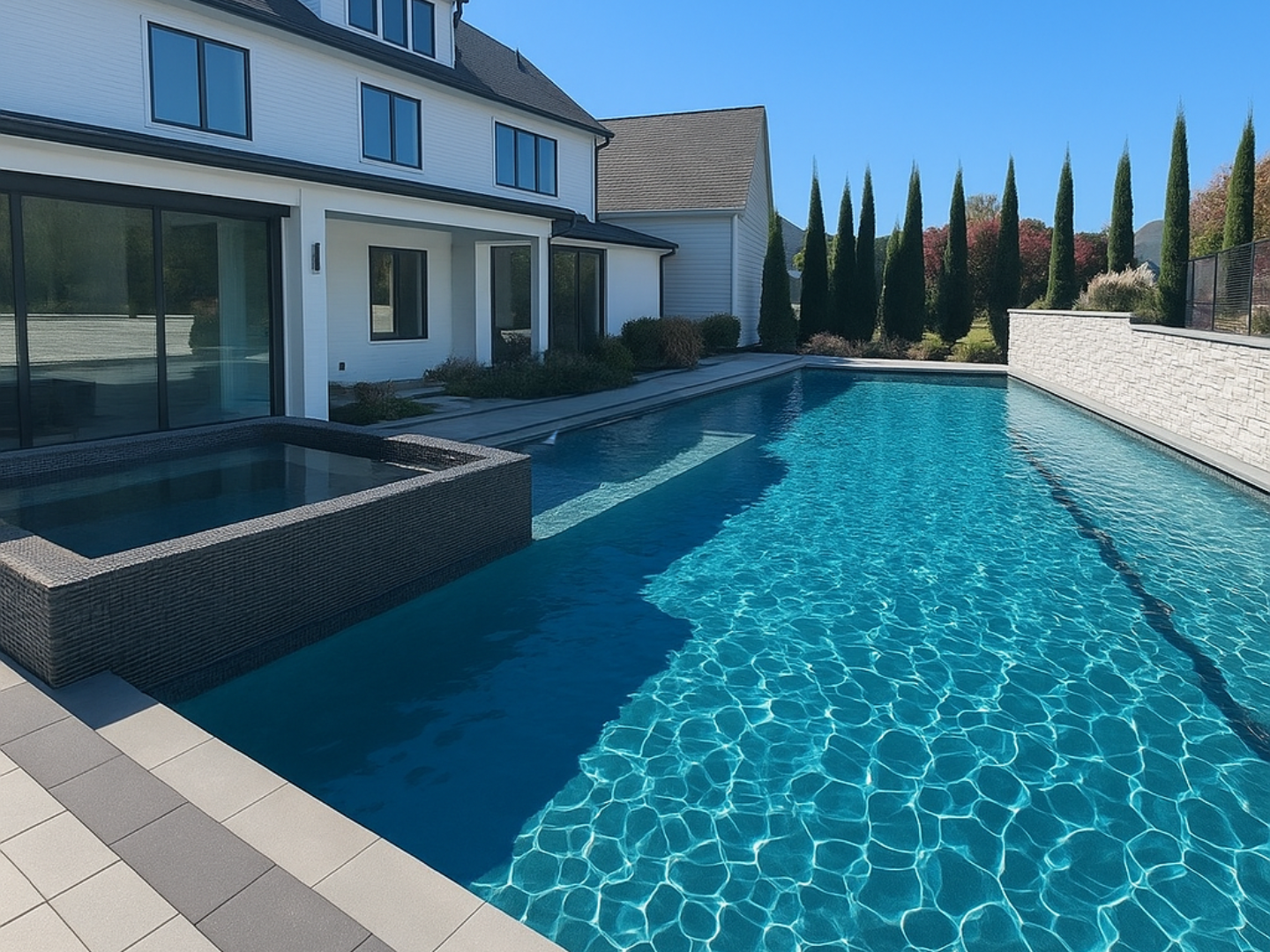
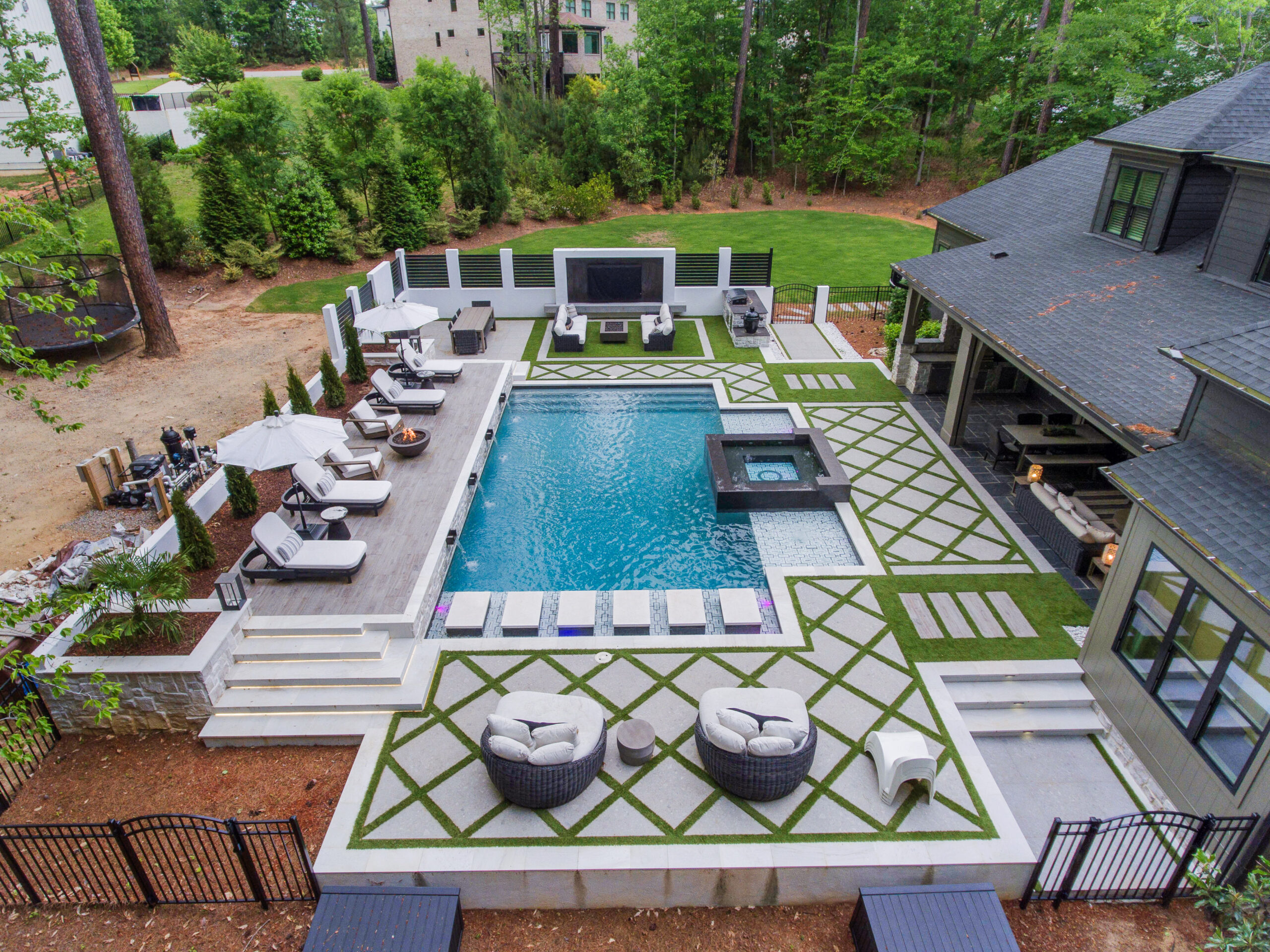
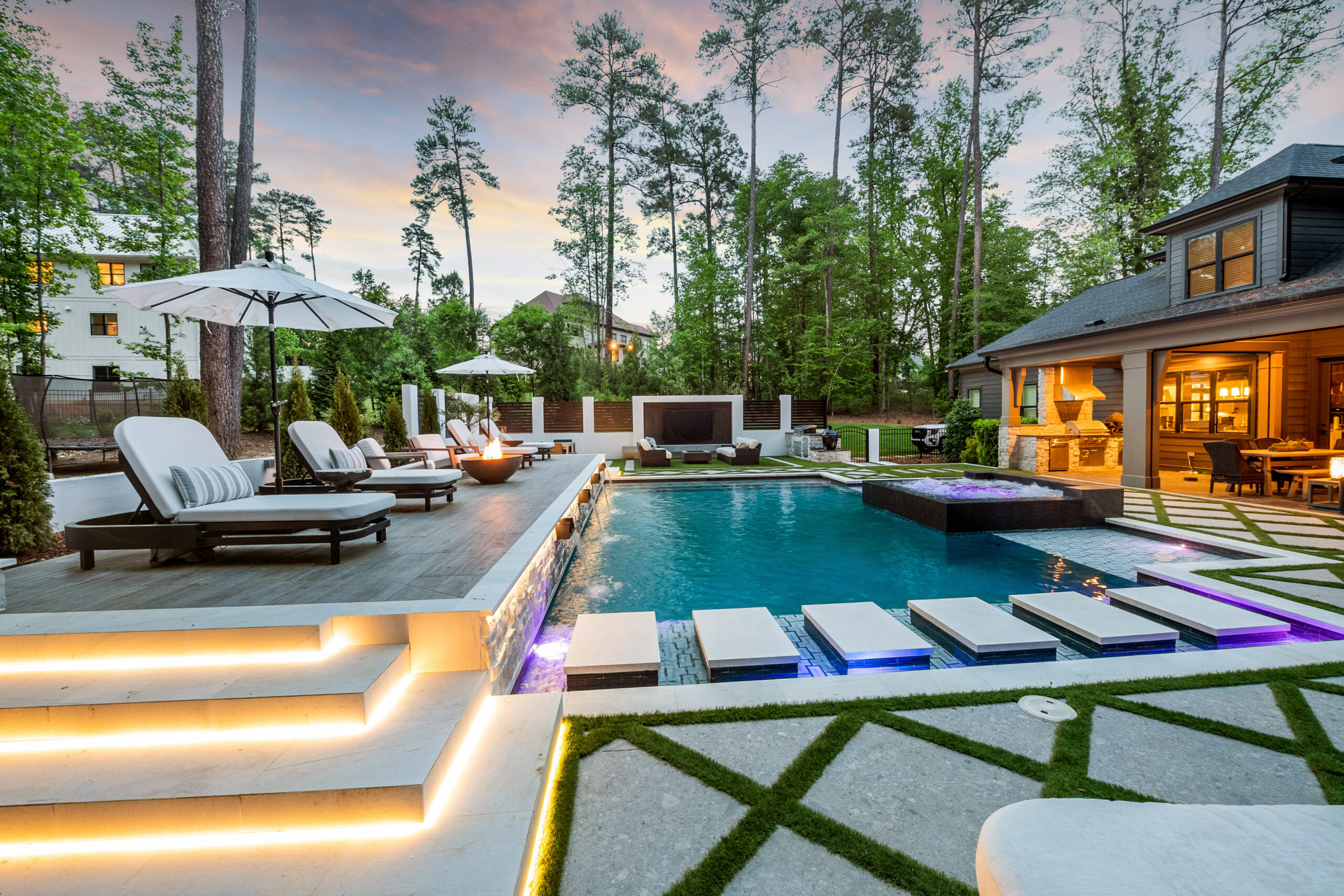
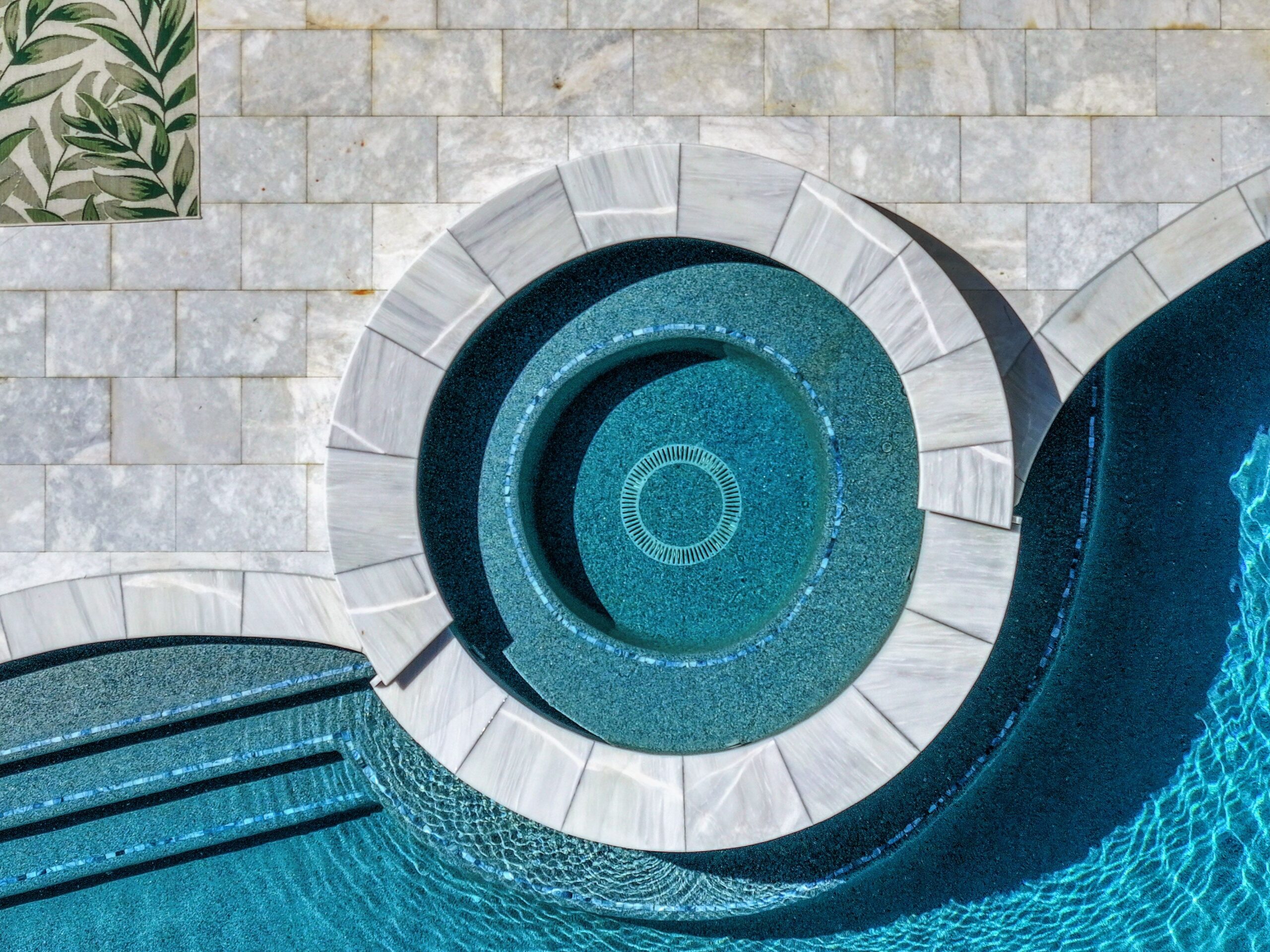
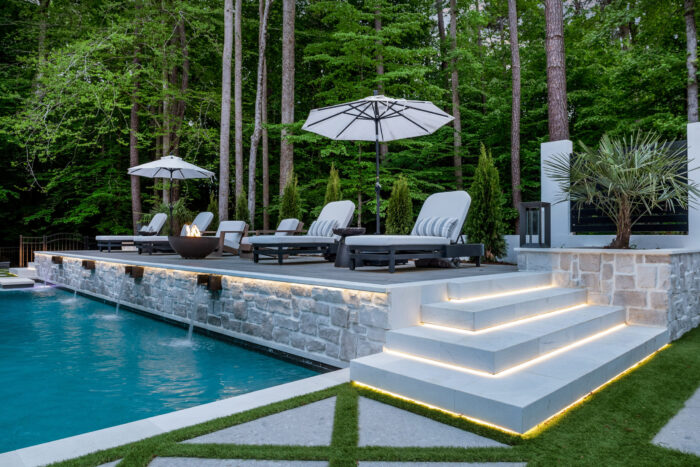
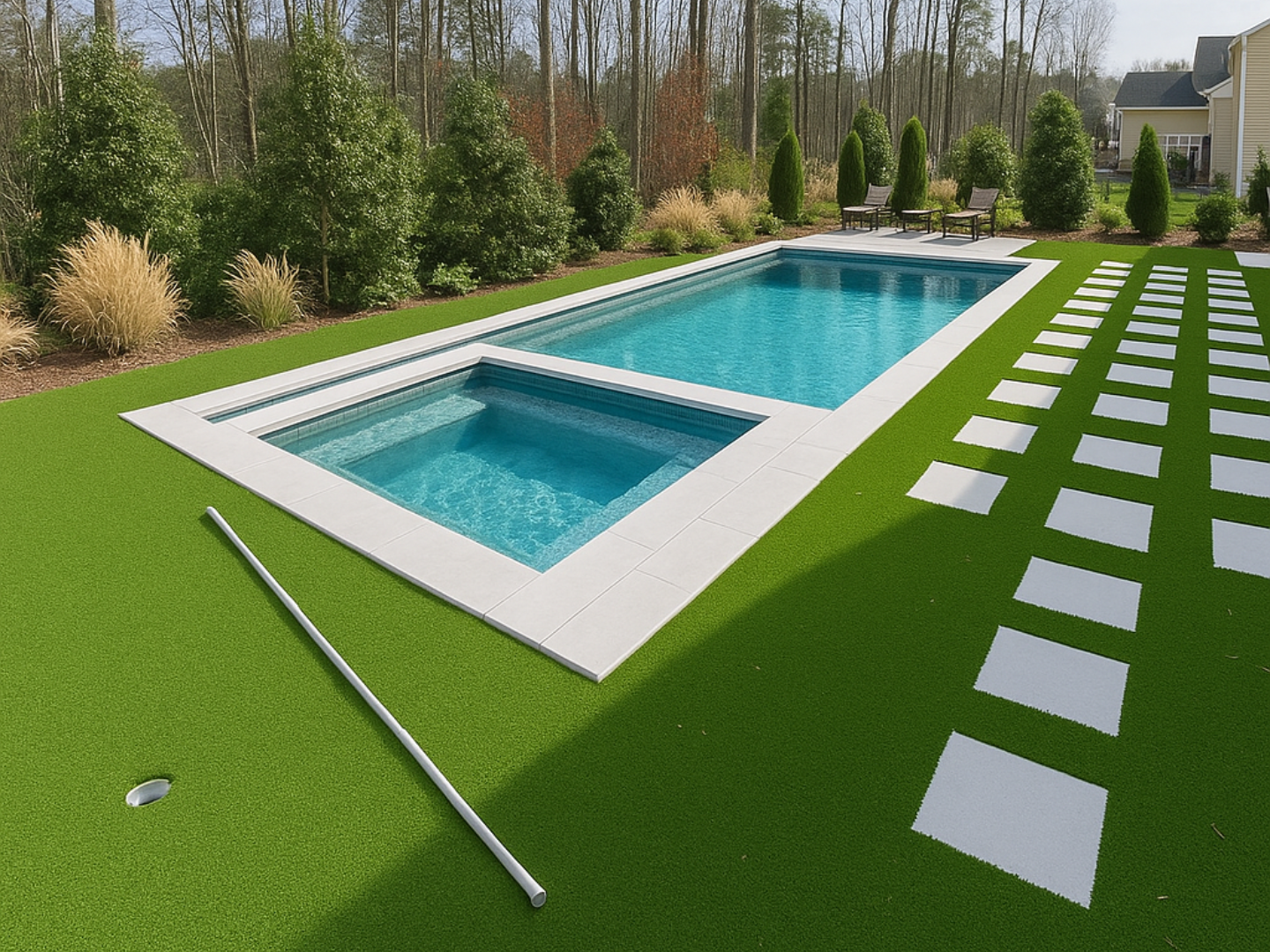
There is something particular about a well-designed tanning ledge pool on a July afternoon in the Triangle. The shallow water warmed from the afternoon sun, a lounge chair positioned for the view, a quiet conversation happening a few feet from where the children are wading. It is the kind of feature that sounds simple in a brief and delivers an outsized improvement to how a family actually uses their backyard.
A tanning ledge pool, also called a Baja shelf or sun shelf, integrates a wide, shallow platform into the pool’s design, typically ranging from 6 to 18 inches deep depending on the intended use. What sets it apart from a simple step entry is intentionality: a well-placed tanning ledge is positioned to capture afternoon sun, designed wide enough for a full chaise lounger, and finished with the same materials as the surrounding deck for a seamless, architectural result.
For homeowners in Cary, Durham, and Chapel Hill considering their pool design, this post covers the design decisions that determine whether a tanning ledge becomes a defining feature or an underused afterthought.

Sun Orientation: The First Design Decision
Before discussing materials, dimensions, or extras like bubblers, the most important decision in tanning ledge design is placement relative to the sun. A tanning ledge positioned without regard to sun orientation may sit in shade for most of the afternoon, precisely when homeowners want to use it.
In North Carolina’s Triangle region, afternoon sun travels from the south and west. For most residential lots, a tanning ledge placed on the south or southwest side of the pool will receive maximum sun exposure from midday through late afternoon. For wooded lots in neighborhoods like Treyburn in Durham or Southern Village in Chapel Hill, tree coverage adds another layer of consideration. A site visit with your designer to observe shade patterns at different times of day is time well spent.
Dimensions and Layout: Design for Real Use
Standard tanning ledges are typically 8 to 12 feet wide and 4 to 6 feet deep. A ledge that is too narrow limits the type of lounge chair that will fit comfortably, and a depth under 6 inches may feel too shallow for adult use. A depth of 9 to 12 inches is generally ideal: deep enough to create a full-body cooling effect but shallow enough for seated comfort.
Layout decisions worth thinking through early include:
- Position relative to entry: Many designers place the tanning ledge adjacent to the primary step entry, creating a natural transition zone from deck to pool. Others position it at the far end for a visual focal point and separation from the main swimming area.
- Deck extension: A tanning ledge that aligns flush with the pool deck on at least one side creates a seamless visual line between the two surfaces, a detail that reads as designed rather than added on.
- Privacy screening: For lots where the tanning area is visible from neighbors or the street, integrating a low planting bed, architectural screen, or pergola element alongside the ledge adds both privacy and spatial definition.
Bubblers: The Detail That Makes a Difference
Bubblers are low-profile water jets installed in the floor of a tanning ledge that create a gentle, upwelling effect. They are a relatively small addition in cost but have an outsized impact on the sensory experience of the space: the quiet sound of moving water, the visual animation, and the cooling effect on a hot day all contribute to making the tanning ledge feel like a destination rather than a shelf.
Most high-end tanning ledge designs in the Triangle include two to four bubblers, positioned toward the outer edge of the ledge so the water movement is visible and audible without disturbing the lounging area. Bubblers are typically tied into the pool’s automation system, so they can be activated independently or as part of a programmed scene.

Materials: Continuity Is the Goal
A tanning ledge that reads as an integrated part of the pool uses the same finish materials as the surrounding deck and pool interior. Common choices in Triangle luxury builds include travertine, porcelain pavers, and natural stone, each of which offers a different texture, heat profile, and aesthetic character.
Travertine has historically been one of the most popular choices for pool decks and tanning ledges in North Carolina: it is naturally cooler underfoot than concrete pavers, handles freeze-thaw cycles reasonably well, and pairs with both traditional and transitional home styles. Porcelain pavers offer a more contemporary look with minimal maintenance and consistent coloring. Natural stone, such as bluestone, slate, or limestone, tends to appear in architectural and high-design environments where material authenticity matters.
The goal is material continuity. When the tanning ledge finish, pool coping, and surrounding deck share the same or complementary materials, the space reads as one cohesive design rather than an assembly of parts.
How a Tanning Ledge Fits Modern Architecture
The homes of Cary’s Preston and MacGregor Downs neighborhoods, or Chapel Hill’s Meadowmont, reflect a range of architectural styles: transitional, craftsman, modern farmhouse, and contemporary. Tanning ledges work with all of them, but the detailing varies.
For more contemporary architectural styles, a tanning ledge with clean right-angle geometry, minimal coping detail, and a flush transition to porcelain paver decking reinforces the home’s architectural language. For transitional or traditional homes, a gently curved ledge edge, travertine or natural stone finish, and an adjacent spa with a stepped spillway creates a softer, more organic composition.
The underlying principle is the same: the tanning ledge should feel like it was always part of the design, not introduced as a product to be installed.
When the Ledge Becomes the Anchor
For many families in Cary, Durham, and Chapel Hill, the tanning ledge pool ends up being the most-used square footage in the entire backyard. It is where children spend summer afternoons, where adults decompress on a weekend, and where the pool transitions from athletic use to pure relaxation. That kind of versatility is rare in any design feature.
Getting it right requires thinking through sun orientation, proportions, materials, and integration early, before the engineering drawings are finalized. The decisions made in the design phase are what determine whether the ledge becomes a fixture or an afterthought.
For a full overview of the features that work alongside a tanning ledge in a complete pool design, see our guide to high-end pool features popular across the Triangle.
According to the Pool & Hot Tub Alliance, tanning ledges have become one of the most consistently requested features in new custom pool builds nationally, a trend that mirrors what Jim Hinson Pools’ design team sees across the Triangle year after year.

Frequently Asked Questions
How deep should a tanning ledge be?
Most tanning ledges are designed between 6 and 12 inches deep. A depth of 9 to 12 inches is typically ideal for adult lounging: enough water to cool down comfortably without feeling too shallow for seated use.
Do bubblers on a tanning ledge require a lot of maintenance?
Bubblers are relatively low-maintenance features. They operate from the pool’s existing circulation system and, when tied into an automation system, can be programmed on timers or activated on demand. Regular inspections during routine pool service visits are generally sufficient.
Can a tanning ledge be added to an existing pool?
In most cases, adding a tanning ledge to an existing pool requires significant structural work, including excavation and gunite modification, which makes it most cost-effective when planned as part of an original build. That said, a renovation-scale project can accommodate one; your builder can assess feasibility during a site visit.
What lounge chairs work best on a tanning ledge?
In-pool chaise lounges designed specifically for aquatic use, with rust-resistant frames and quick-dry materials, are the standard choice. Most quality designs sit at ledge depths of 9 to 12 inches without issue.
Request a design consult with Jim Hinson Pools to explore tanning ledge options tailored to your Triangle property and architectural style.