


Imagine stepping into your backyard on a summer evening in Cary, the air still warm, the water lit from below in soft blue hues, a glass of something cold in hand. The spa is ready. The outdoor kitchen hums quietly to one side. You did not drive to a resort. This is home.
High-end pool features are what separate a beautiful pool from a complete outdoor environment. For homeowners in Cary, Durham, and Chapel Hill, the right combination of features does two things: it elevates the visual impact of the space and improves how the family actually lives in it. Every feature covered here was chosen because it performs both jobs.
At Jim Hinson Pools, more than 50 years of design-build experience has taught us which features stand the test of time. What we have found consistently is that the features homeowners treasure most are the ones thoughtfully integrated from the beginning, not added as afterthoughts.

Tanning Ledges: Where Family Time Lives
Tanning ledges, also called Baja shelves or sun shelves, are one of the most-requested features in luxury pool designs across the Triangle. A tanning ledge is a wide, shallow platform, typically 6 to 12 inches deep, that sits at the pool’s edge and is designed for lounging, children wading, or simply sitting with feet in the water.
What makes this feature stand out is its versatility. Adults can recline in shallow water with a chaise lounger and umbrella while children play safely nearby. Bubblers installed on the ledge create gentle water movement and a pleasant sound environment. For modern architectural designs common in neighborhoods like Preston in Cary and Meadowmont in Chapel Hill, the tanning ledge adds a clean, horizontal plane that complements contemporary home lines.
Spas and Raised Spillways: Year-Round Comfort
North Carolina’s shoulder seasons, spring and fall, are among the most beautiful times to be outdoors in the Triangle. A well-integrated spa extends the useful life of your outdoor environment from roughly four months to nearly twelve.
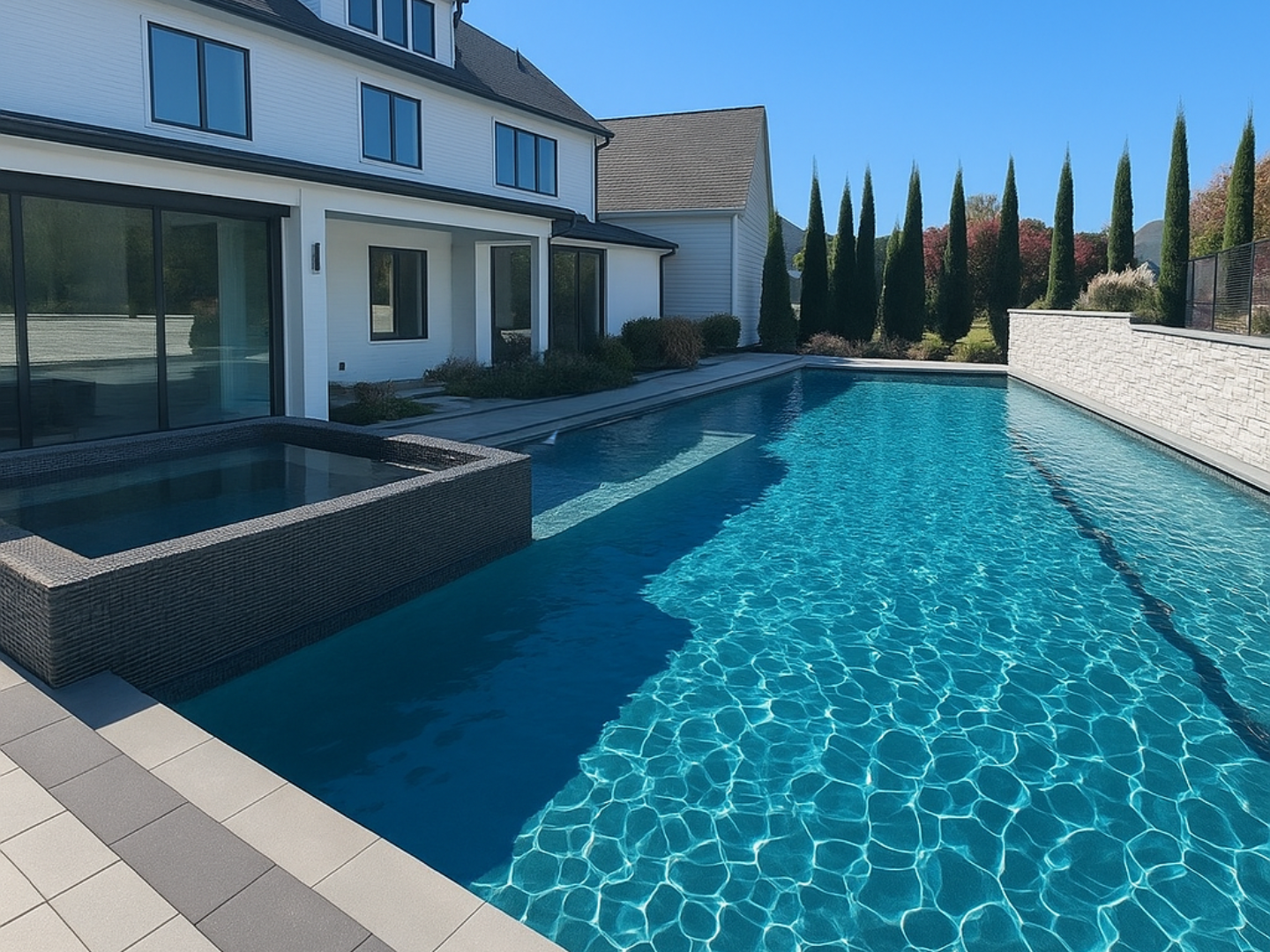
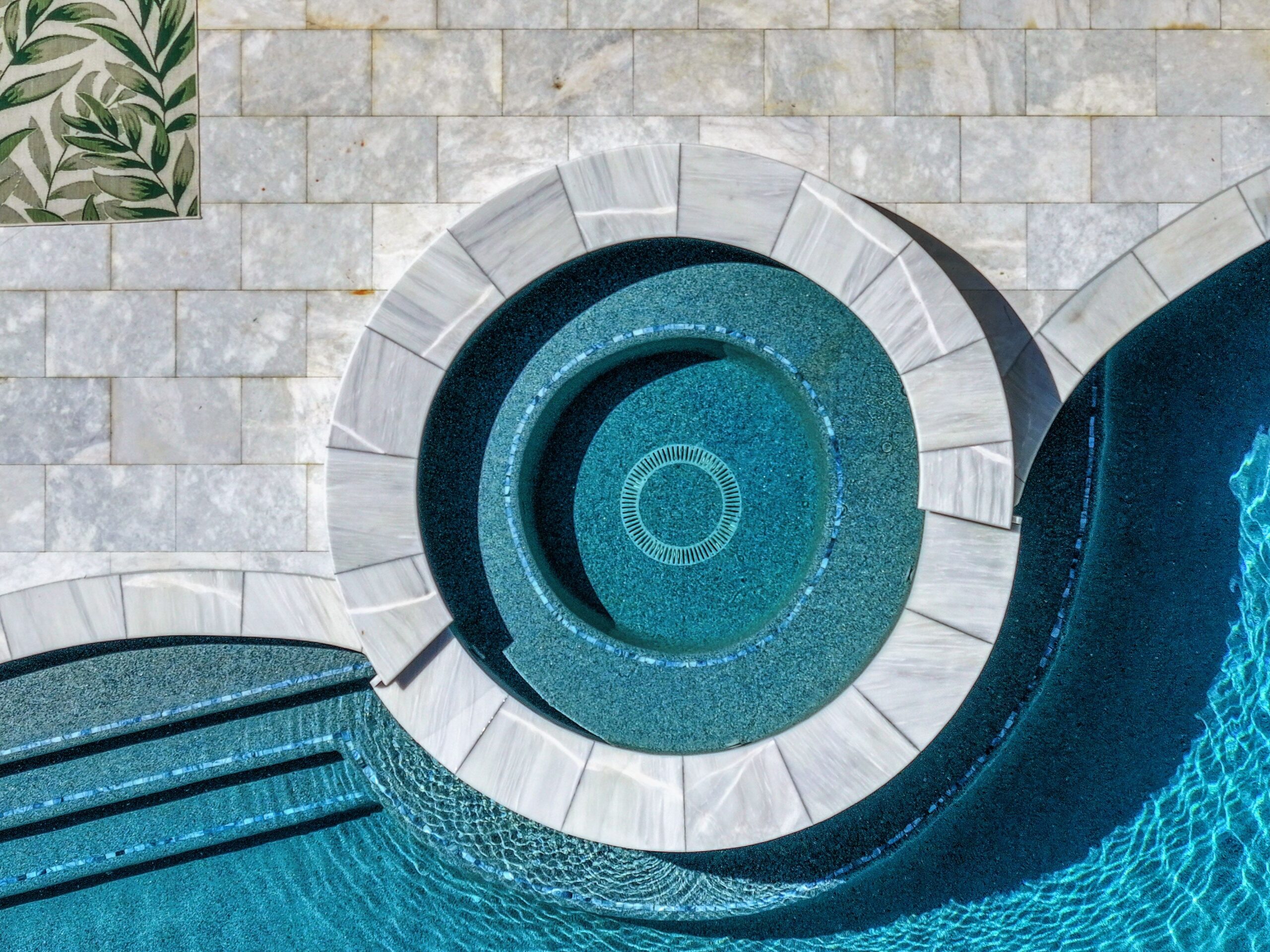
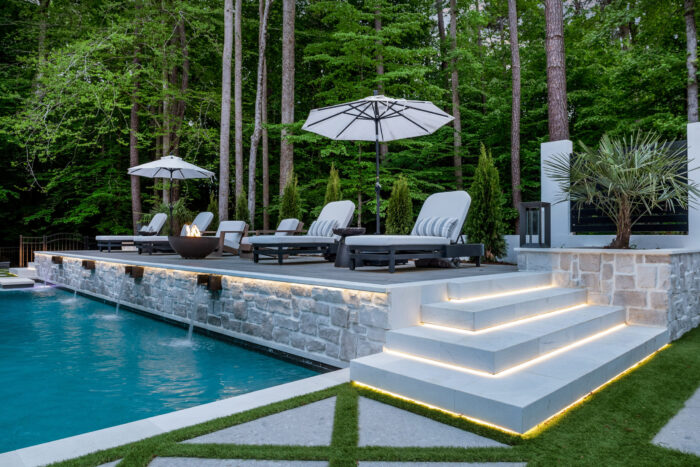
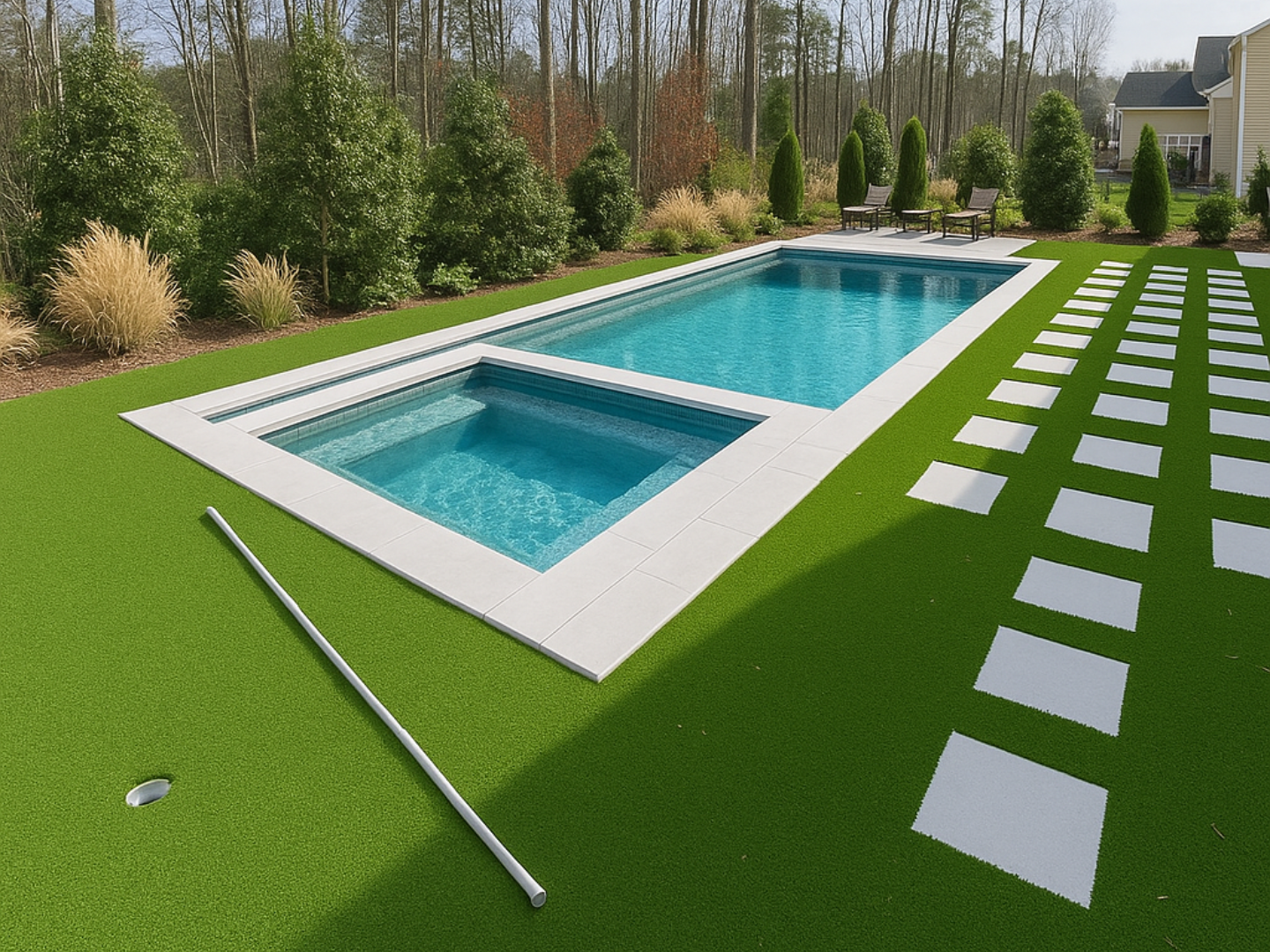
A raised spa with a spillway into the main pool is one of the most architecturally striking combinations in custom backyard design. The raised elevation creates a visual focal point, the sound of moving water adds ambiance, and the thermal contrast between spa and pool makes the experience genuinely resort-like. For homeowners in Durham’s Hope Valley or Chapel Hill’s Governors Club, where outdoor living is a year-round pursuit, the spa is less of an upgrade and more of an essential.
Independent temperature controls, programmable via automation systems, allow the spa to be ready when you are. No warm-up time required when entertaining guests.
Water Features: Architecture for Your Backyard
Water features give a pool its character. The sound of water, the movement across stone, the way light plays on a sheer descent at night, these sensory details are what make a backyard feel designed rather than merely built.
The most popular water features in Triangle luxury pools include sheer descents, which produce a thin glassy sheet of water from a raised wall; scuppers, where water pours through an opening in a raised wall or spa structure; and bubblers, low-profile jets installed in tanning ledges or shallow areas that create gentle ambient movement. Each contributes to the sensory environment in ways that photographs can hint at but only the actual space delivers.
Lighting: Designing the Nighttime Experience
A pool that looks stunning by day and disappears at night is a missed opportunity. Thoughtful lighting design is what separates a pool from an outdoor room. It extends the hours of use, enhances safety, and gives the entire backyard environment its evening personality.
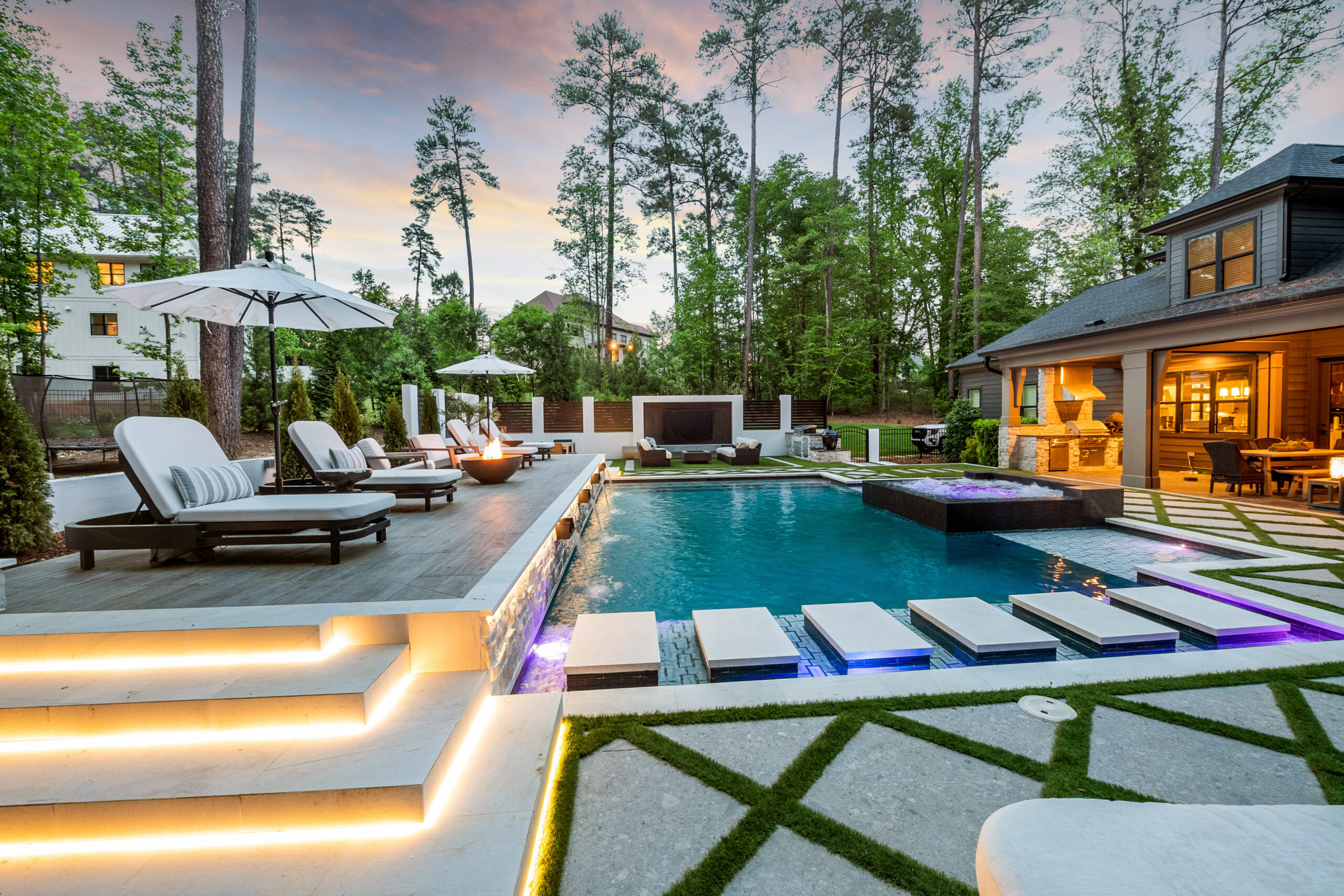
LED pool lights have advanced considerably in recent years. Color-changing options allow homeowners to shift the mood for different occasions: a white setting for family swim, a warmer amber for an evening dinner party, or a deep blue for quiet relaxation. Beyond the pool itself, step lighting, waterline illumination, and accent lighting on raised walls and landscape features all contribute to a layered, intentional aesthetic.
Automation systems tie it all together. With a single app, homeowners in Cary or Durham can set a lighting scene, adjust the spa temperature, and start the water features before they step outside.
Pool Automation: Convenience Built In
A luxury pool environment in involves more simultaneous systems than any homeowner should be expected to manage manually: pool temperature, spa temperature, pump schedules, lighting scenes across three or more zones, water feature activation, and chemical dosing. An automation system brings all of these under a single interface, a dedicated touchscreen panel at the house and a smartphone app that works from anywhere. The system manages the pool. The homeowner just uses it.
The practical value compounds over time. The spa is at temperature when guests arrive because it was activated remotely on the drive home. The lighting transitions to an entertaining scene automatically at sunset. The water features come on as part of the arrival sequence. The pool chemistry is monitored and alerts are sent if something needs attention. These are not conveniences of novelty. They are conveniences of daily life, the kind that homeowners stop noticing because they simply work.
Variable-speed pumps, which are standard in most current automation packages, address energy consumption directly. Unlike single-speed pumps that run at full power regardless of demand, variable-speed units modulate output based on what is actually needed at any given time. For a pool running through a full North Carolina season from March through November, the cumulative energy reduction compared to a single-speed system is significant, a benefit that continues to compound for the life of the equipment.
Systems from Pentair and Hayward have the most established track records in residential custom pool automation, with strong app platforms, broad compatibility with third-party pool features and smart home systems, and extensive service networks. When evaluating automation options with your builder, the questions that matter most are what the system controls, how the integration with existing smart home platforms is handled, what the monitoring and alert capabilities are, and what the service path looks like when maintenance is needed.

Fire Features: The Element That Extends the Season
A fire feature adjacent to a pool does something no aquatic feature can: it shifts the outdoor season forward and backward. In North Carolina, where the most comfortable outdoor evenings often fall in late March and early October rather than the middle of July, a fire bowl or linear fire feature means there is a reason to sit outside on evenings when the pool itself is too cool to use. The fire does not replace the pool in those moments. It makes the space around the pool worth being in.
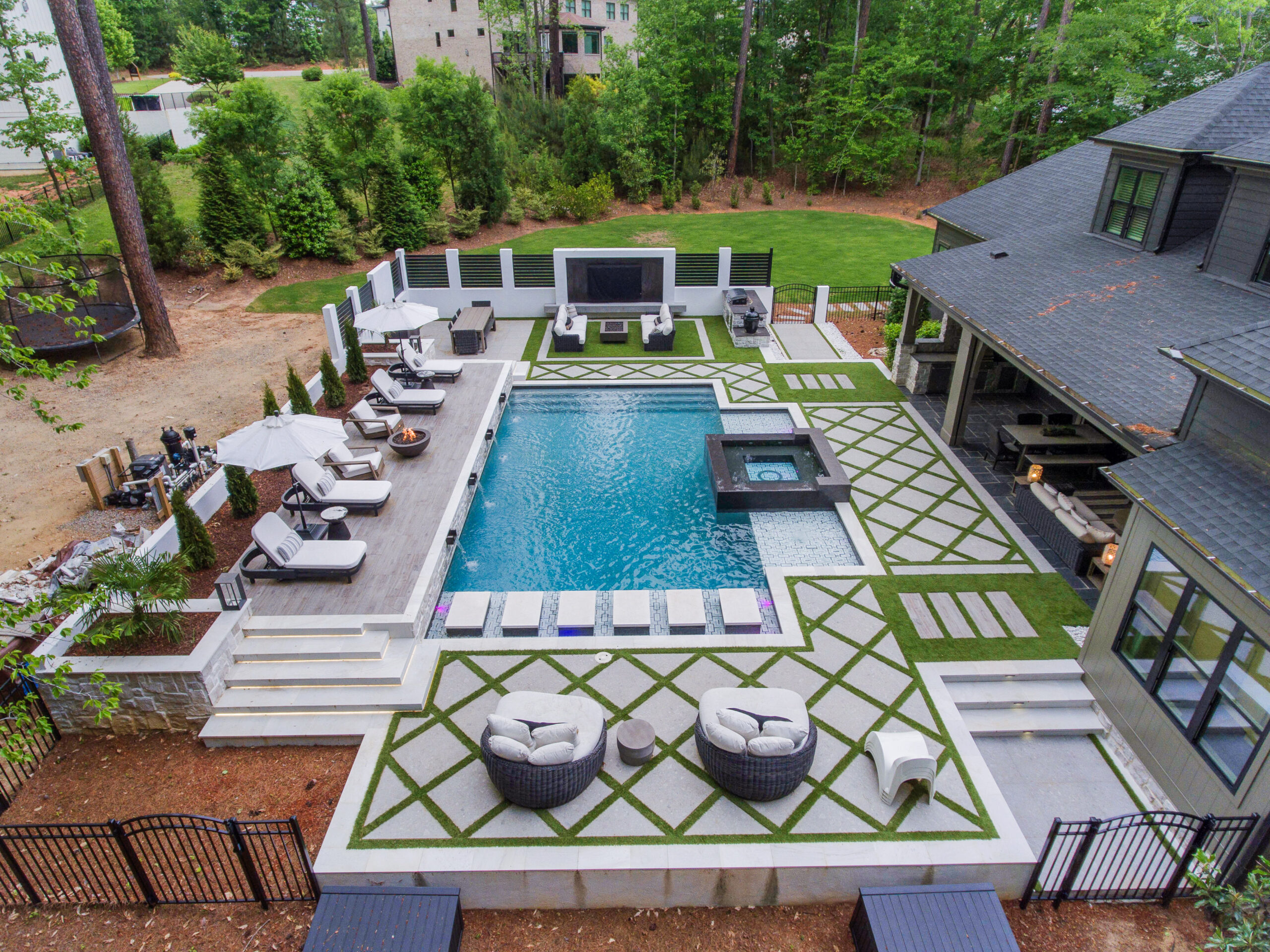
The most common fire features in Triangle luxury pool environments include fire bowls, rounded vessels mounted on pedestals or integrated into raised wall structures, linear fire tables, which run long rectangular burners across a hardscape surface and create a continuous flame effect, and fire pits, recessed burners embedded in paver decks or set within low seating walls. Each creates a different visual scale and social configuration in the space.
Fire features introduce vertical interest and warmth into a design space that is predominantly horizontal. A pair of fire bowls flanking a raised spa wall creates a composed, symmetrical focal point that draws guests toward a center and anchors the social zone of the backyard. The relationship between fire and water, contrast of temperature, movement, and light, is one that designers have returned to across centuries of outdoor space-making for good reason. It works because it activates something in people that is prior to aesthetic preference.
How Features Work Together as a System
Selecting features individually, each evaluated on its own merits and added to a project scope, is a reasonable starting point but an incomplete methodology. The backyard environments that feel most resolved are those where the feature selections were made as a system: where the sheer descent is positioned to face the spa seating, where the spa’s spillway sound is at the right level to be heard from the outdoor kitchen without overwhelming conversation, where the lighting scenes tie the water features, spa controls, and accent lights together so the whole environment shifts at once.
This kind of integration requires planning from the beginning and is a significant practical advantage of the design-build process. When the same firm managing the design also manages the construction, and when both conversations are happening simultaneously from day one, the feature integration decisions are resolved in drawings before they become construction conflicts. A separate designer and a separate contractor, working sequentially, produce different results, often because the integration decisions that require design-build coordination never happen as a single conversation.
For homeowners in the Triangle planning a new pool, the most productive use of early design consultations is not to present a features list but to describe how the family actually uses outdoor space. What does a typical summer Saturday look like? Is the priority entertaining adults, children’s play, athletic swimming, or quiet retreat? What time of day is the backyard most used? The answers to those questions are what determine which features belong in the design and which ones will go underused regardless of how well they photograph.

What to Ask Your Pool Designer About High-End Features
The best high-end pool features are the ones that work together as a system, not collected individually. When meeting with your designer, a few questions worth raising:
- Which features make the most functional sense given how our family actually uses outdoor space?
- How do water features, lighting, and automation integrate so everything can be controlled simply?
- What is the maintenance reality of each feature, and how does it compare to the value it adds?
- Are there features that are better planned from the start versus added later?
- How do the proposed features interact with our home’s architectural style?
Frequently Asked Questions
What are the most popular high-end pool features in North Carolina?
Tanning ledges, raised spas with spillways, sheer descent water features, LED lighting with automation, and fire features are consistently among the most requested elements in luxury Triangle pool builds.
Do high-end pool features increase home value?
A well-designed luxury pool and outdoor environment can meaningfully increase a home’s appeal and perceived value, particularly in neighborhoods where outdoor living is a priority. The most impactful investments tend to be those integrated into the original design rather than added later.
Can features be added to an existing pool?
Some features, like automation upgrades, lighting, and certain water features, can be retrofitted. Others, like tanning ledges or raised spas, are most cost-effective and structurally sound when planned from the beginning of the build.
How do I decide which features are worth the investment?
The best starting point is a design consultation with a builder who can assess your lot, your home’s architecture, and your lifestyle. Features that integrate well with the overall design and how you actually use your outdoor space consistently deliver the best long-term value.
Designed to Be Lived In, Not Just Looked At
The most enduring luxury backyards in Cary, Durham, and Chapel Hill are not the ones with the longest feature list. They are the ones where every element was chosen intentionally, where form follows function and nothing feels tacked on.
Jim Hinson Pools has spent more than 50 years learning which features stand the test of time and which ones homeowners stop using after two seasons. Every design consultation is a conversation about your life, your home, and the kind of backyard that will still feel right a decade from now. For more on industry standards and best practices in custom pool design, the Pool & Hot Tub Alliance (PHTA) is a reliable resource on product performance and construction benchmarks.
Talk through feature options with our team and schedule a design consultation with Jim Hinson Pools to explore what is possible.