


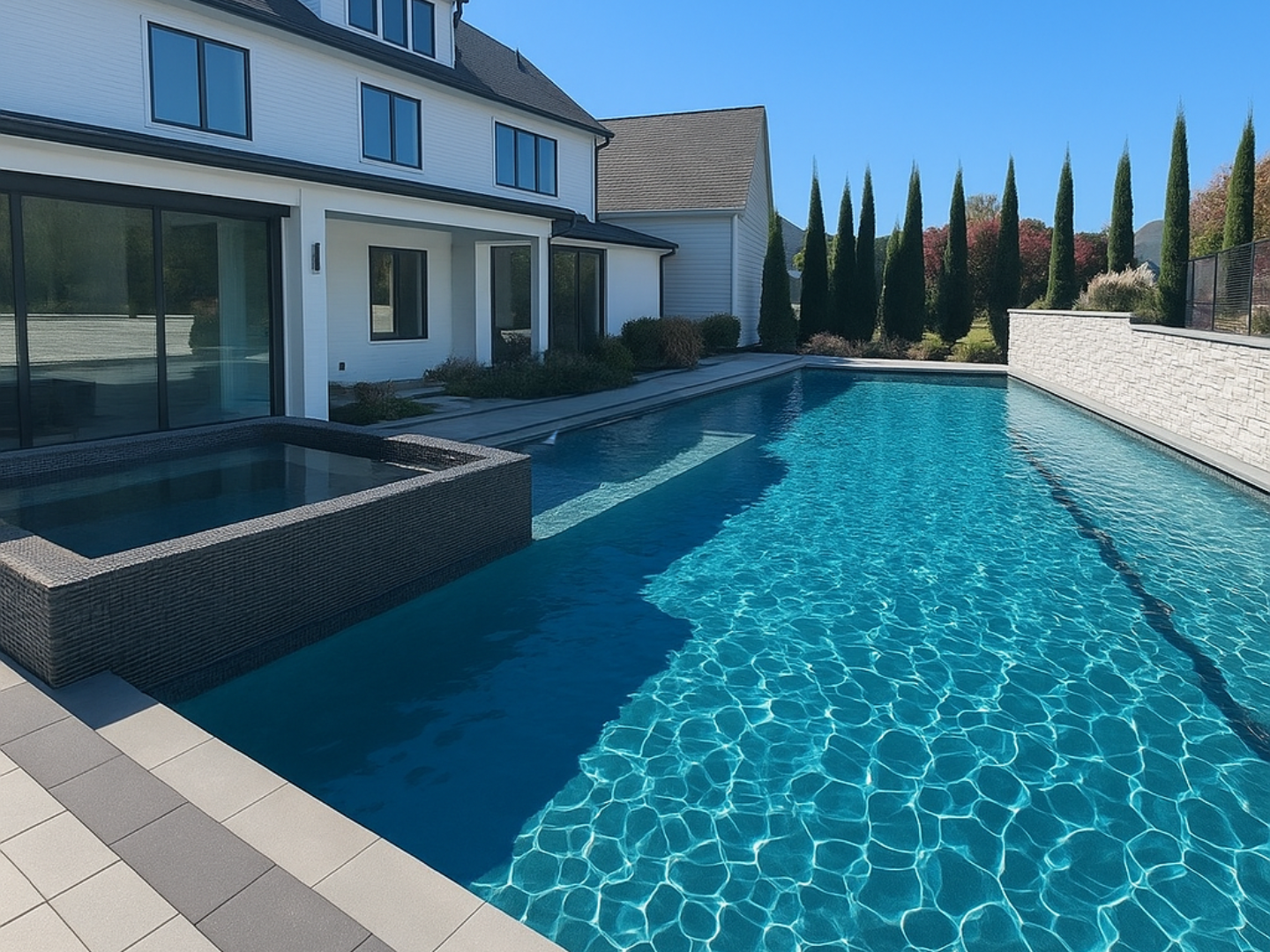
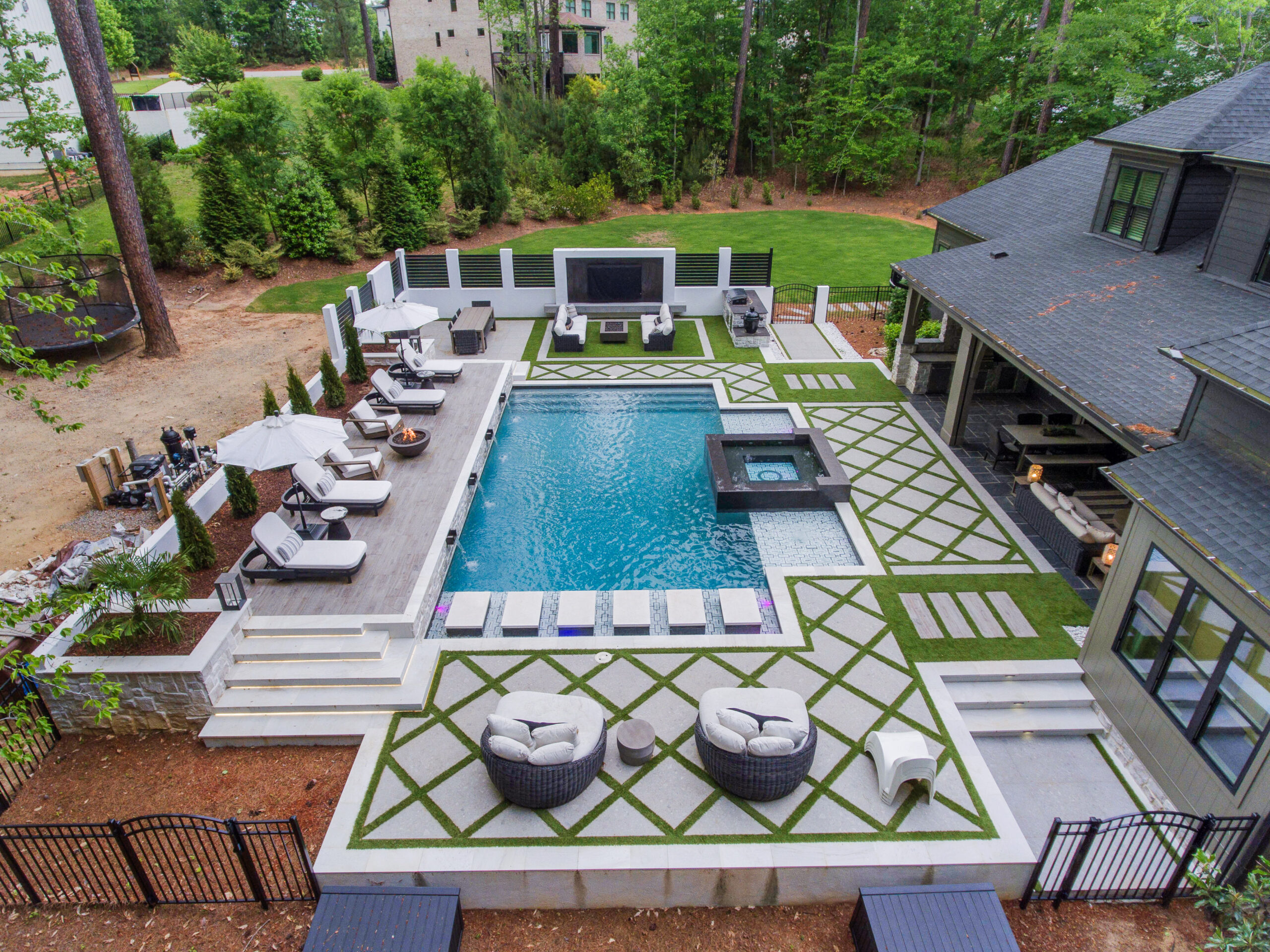
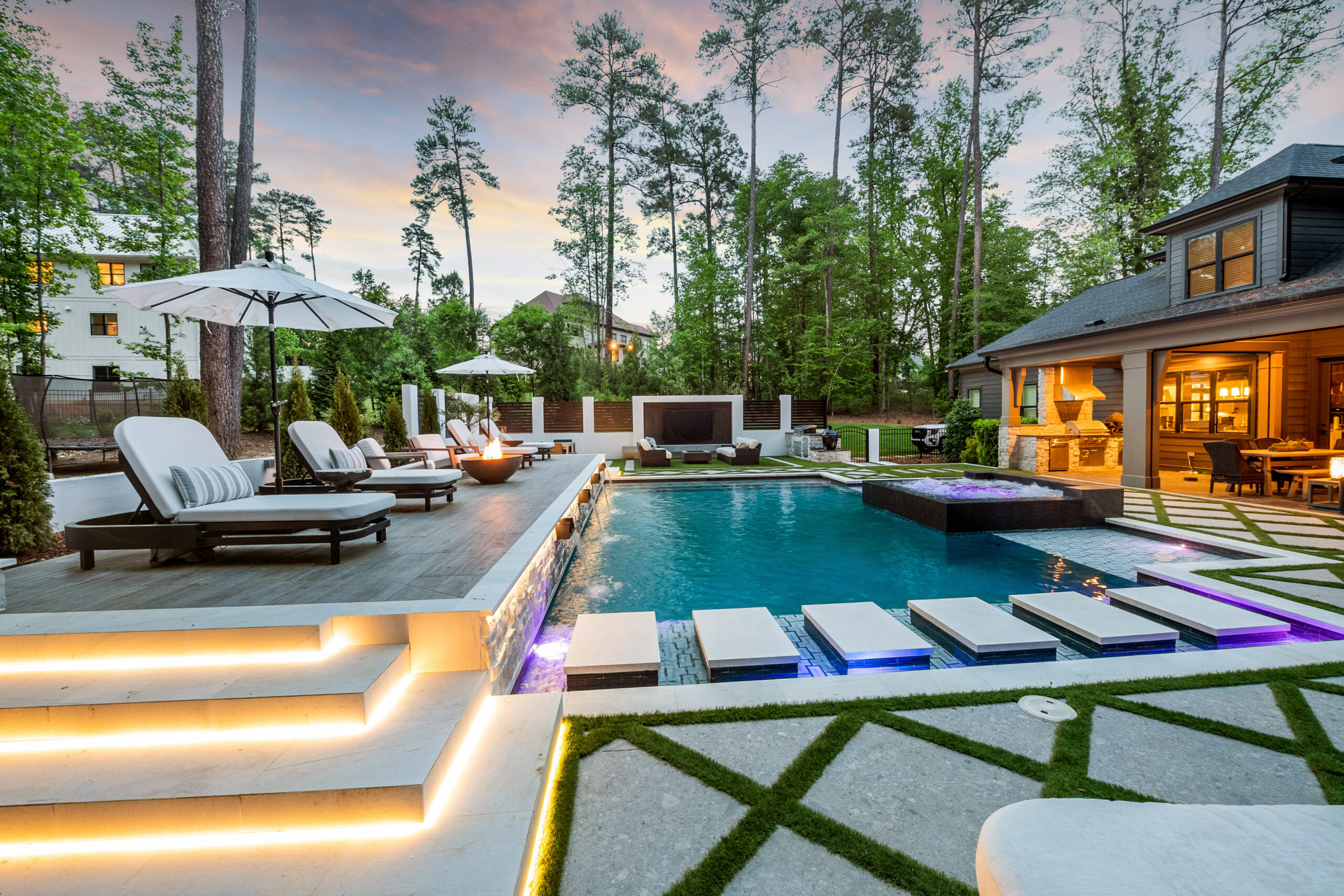
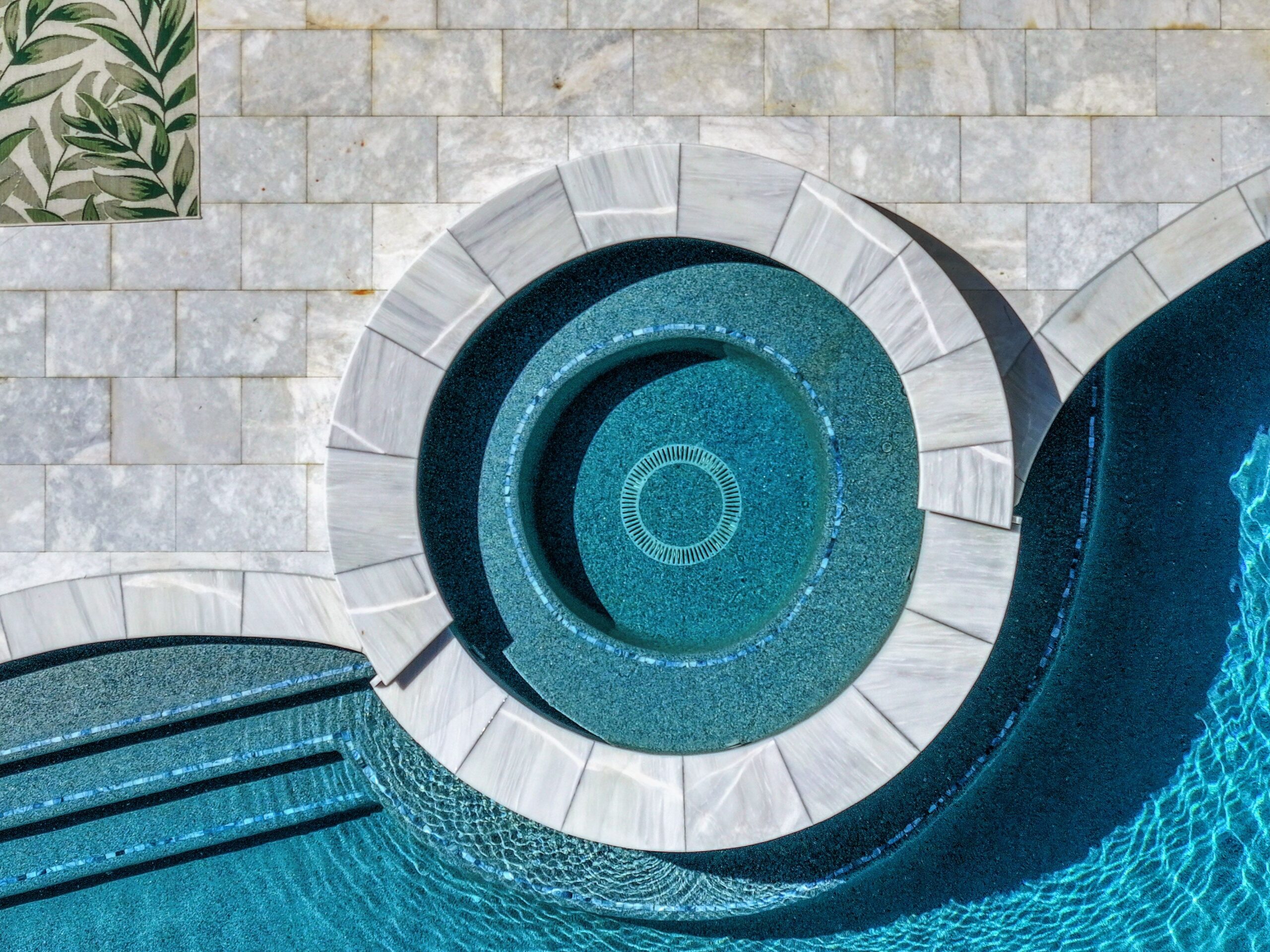
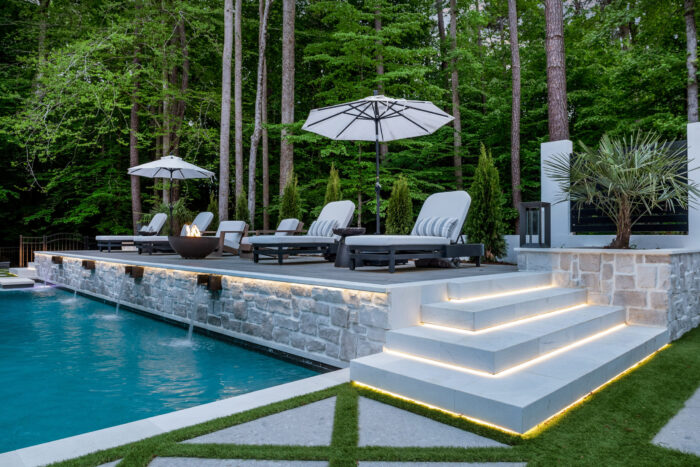
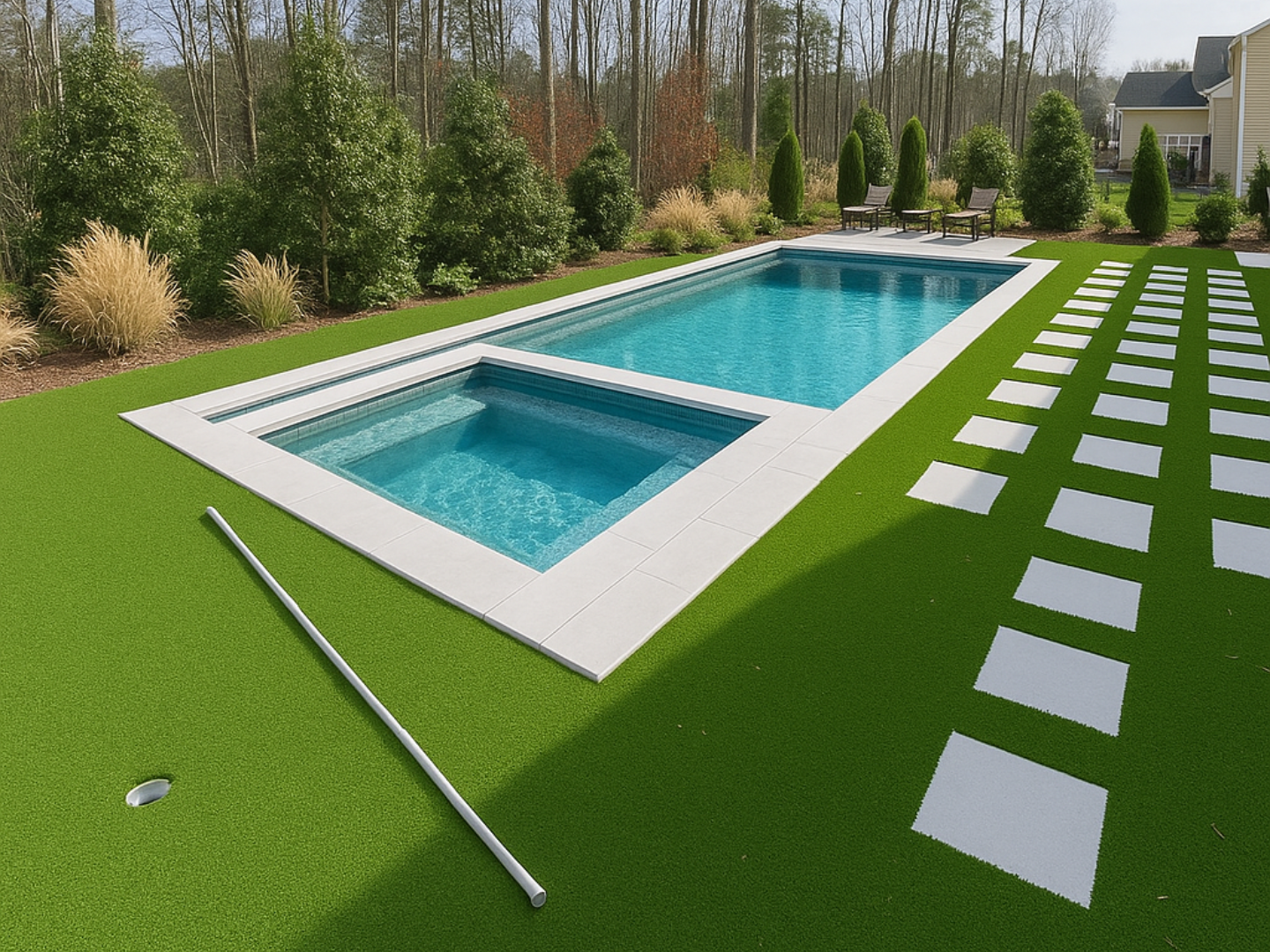
There is a moment, usually around 9 p.m. on a summer evening in the Triangle, when the pool lights come on and everything shifts. The water takes on a depth it does not have by day. The surrounding deck recedes into soft shadow. The sheer descent glows from within. The space that was a pool becomes something closer to an outdoor room, and no one goes inside.
Pool lighting design is one of the most underappreciated parts of a custom pool project. Homeowners spend months selecting tile, coping, and water features, and occasionally less than an afternoon thinking about how the space will be lit after dark. The result, in many cases, is a beautiful pool by day and a missed opportunity at night.
For homeowners in Cary, Durham, and Chapel Hill building or renovating a custom pool, this guide covers the lighting decisions that make the difference: placement strategy, fixture types, safety considerations, and how automation brings it all together.

Start With Placement, Not Fixtures
The single most important aspect of pool lighting design is not what kind of light you use. It is where you put it. Poorly placed fixtures create glare, flat illumination, and a utilitarian quality that no fixture upgrade can fully overcome. Thoughtful placement creates depth, drama, and a sense that the lighting was designed rather than installed.
A layered lighting approach, used in virtually every luxury backyard project Jim Hinson Pools designs in the Triangle, includes at least three distinct zones:
- In-pool lights: Fixtures mounted in the pool walls below the waterline. These create the foundational glow that makes a lit pool visible from the house and gives the water its depth.
- Step and safety lights: Low-level lights at every step entry and ledge transition. These are functional first, aesthetic second, but well-chosen fixtures integrate both.
- Accent and architectural lights: Fixtures that illuminate raised walls, water features, pergola columns, and landscape elements surrounding the pool. This layer creates the context that turns a pool into a backyard environment.
Each zone contributes something distinct. Remove any one of them and the design feels incomplete.
LED Pool Lights: What the Technology Actually Allows
LED pool lighting has largely replaced halogen and incandescent options in custom pool construction, and for good reason. The energy efficiency is significant, with LED fixtures typically using 60 to 75 percent less electricity than halogen equivalents. But the more relevant benefit for luxury homeowners is the control.
Modern LED pool lights are color-programmable. A single fixture can produce a full spectrum of white from warm to cool, blue, green, red, and combination colors, all switchable from a smartphone app or automation panel. A crisp bright white for family swim time, a warm amber or soft blue for an evening dinner by the pool, a dynamic setting for a party, or a quiet dim glow for late-night relaxation. Each scene is a setting change, not a project.
Niche-mount LED fixtures installed flush with the pool wall at the waterline produce the most visually refined effect in high-end builds. They require precision during the construction phase, which is one reason fixture planning and pool design need to happen simultaneously rather than in sequence.

Waterline Glow and Accent Lighting: The Details That Read as Designed
Some of the most impactful lighting details in a luxury pool are not the ones inside the water. They are the ones along the perimeter.
Under-coping LED strip lighting, concealed beneath the pool coping and directed downward, creates a soft waterline glow that defines the pool’s edge at night. The effect is subtle in photographs but immediate in person: the pool appears to float, separated from the surrounding deck by a ribbon of light.
Raised wall lighting follows similar logic. When a raised spa wall, fire feature wall, or outdoor kitchen structure is lit from above with a recessed downlight or below with a concealed uplift, it becomes an architectural element at night rather than a dark mass. Water features, particularly sheer descents with integrated LED heads, change character completely after dark when lit from within.
The principle throughout: light reveals the architecture. The decisions that determine whether it succeeds are made during the design phase, not after construction.
Step Safety and Glare Management
No discussion of pool lighting design is complete without addressing safety and glare. Both are practical concerns that good design resolves without compromising aesthetics.
Step lighting, recessed lights mounted in pool steps and tanning ledge risers, is a non-negotiable safety element. Steps that are clearly visible by day can be difficult to see at night without dedicated lighting. Low-profile, niche-mounted step lights integrated into the step riser create a clear delineation without introducing a harsh point of light.
Glare management matters most for pools positioned to be viewed from the house. Fixtures aimed directly at a seating area, or placed without consideration for sightlines, create discomfort for anyone looking toward the pool. The solution is fixture selection and aiming: choosing optics designed for underwater or low-glare applications and positioning them to direct light into the water or toward a surface rather than toward the viewer.

Automation: When Everything Works Together
Pool lighting design reaches its full potential when integrated with the pool’s automation system. A well-designed automation setup allows homeowners in Cary or Durham to control every lighting zone, from pool lights to step lights to accent lights to water feature LEDs, from a single app, with named scenes for different occasions.
Common automation scenes in luxury Triangle builds include an everyday setting at moderate brightness with step lights on, an entertaining mode with full illumination and water features running, an evening wind-down setting with dim pool lights and the spa running, and a security mode with all lights at full brightness. Integration also means the lights respond to time of day and season, requiring no manual input once programmed.
For a broader look at the features that come together in a complete luxury pool design, see our guide to high-end pool features popular in Cary, Durham, and Chapel Hill. For homeowners planning a project in Durham, our Custom Pool Builder in Durham, NC page provides an overview of the design and build experience in that market.
According to the U.S. Department of Energy, LED pool lights use significantly less energy than traditional halogen equivalents, making them both a performance upgrade and a long-term cost-efficiency decision for homeowners.
What to Ask Your Pool Designer About Lighting
Before finalizing a pool design, a few questions worth raising with your builder:
- How many lighting zones are included in the plan, and what does each one do?
- Are fixture positions and types shown in the design drawings, or are they decided during construction?
- How will the lighting system integrate with the pool’s automation platform?
- What are the options for in-pool LED color and dimming control?
- How are step lights handled, and are they integrated into the design drawings?
The Backyard That Stays With You
The pools homeowners remember are not always the largest or the most feature-rich. They are the ones that felt like somewhere worth being after the sun went down, where the lighting turned a summer evening into a memory rather than a reason to go inside.
Lighting design is how that happens. Not as a final detail, but as a foundational decision made early, planned with intention, and executed with the same care as every other element in the build.
Schedule a lighting and features consult with Jim Hinson Pools to map out a layered lighting strategy for your Cary, Durham, or Chapel Hill backyard.