


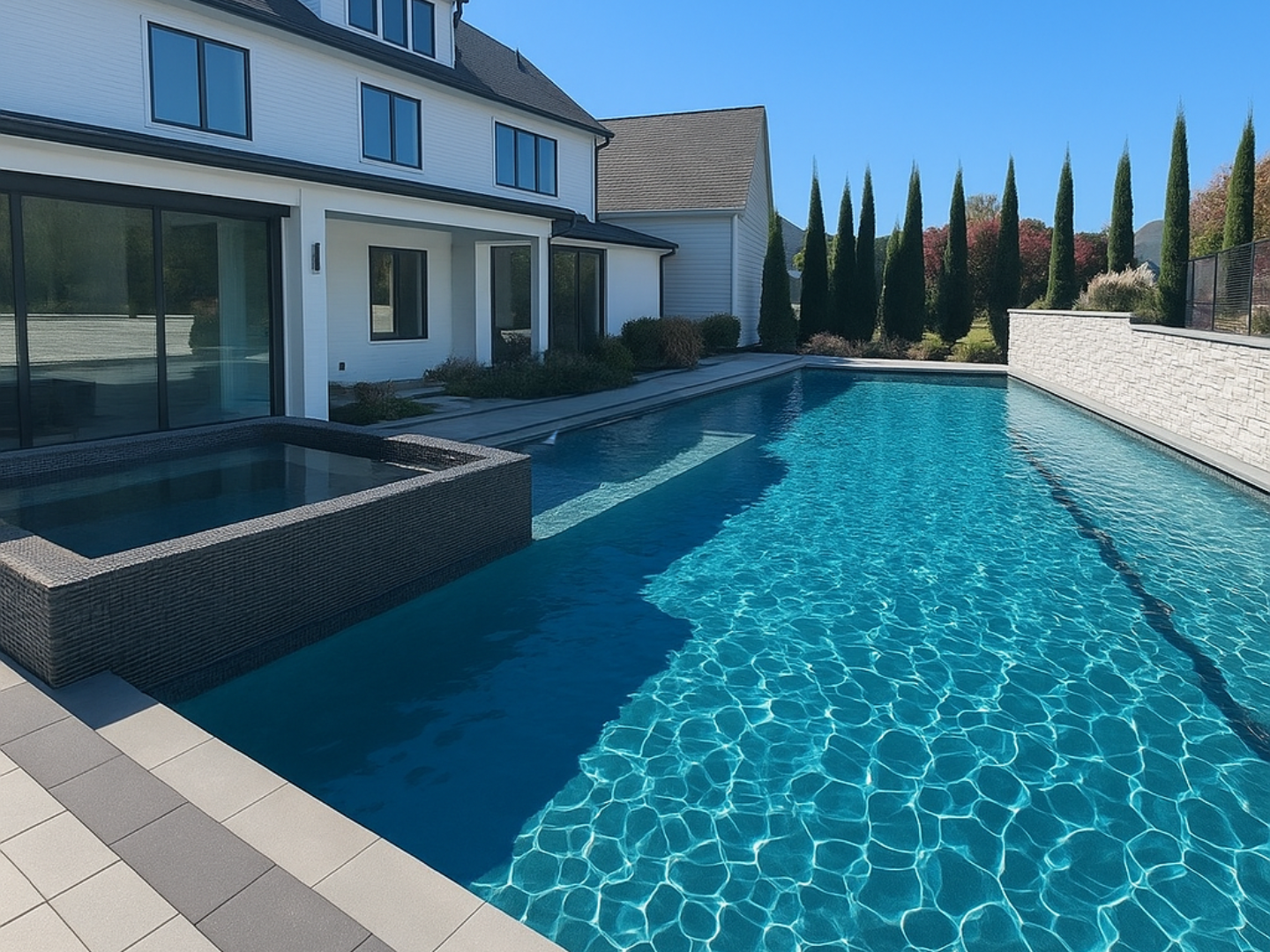
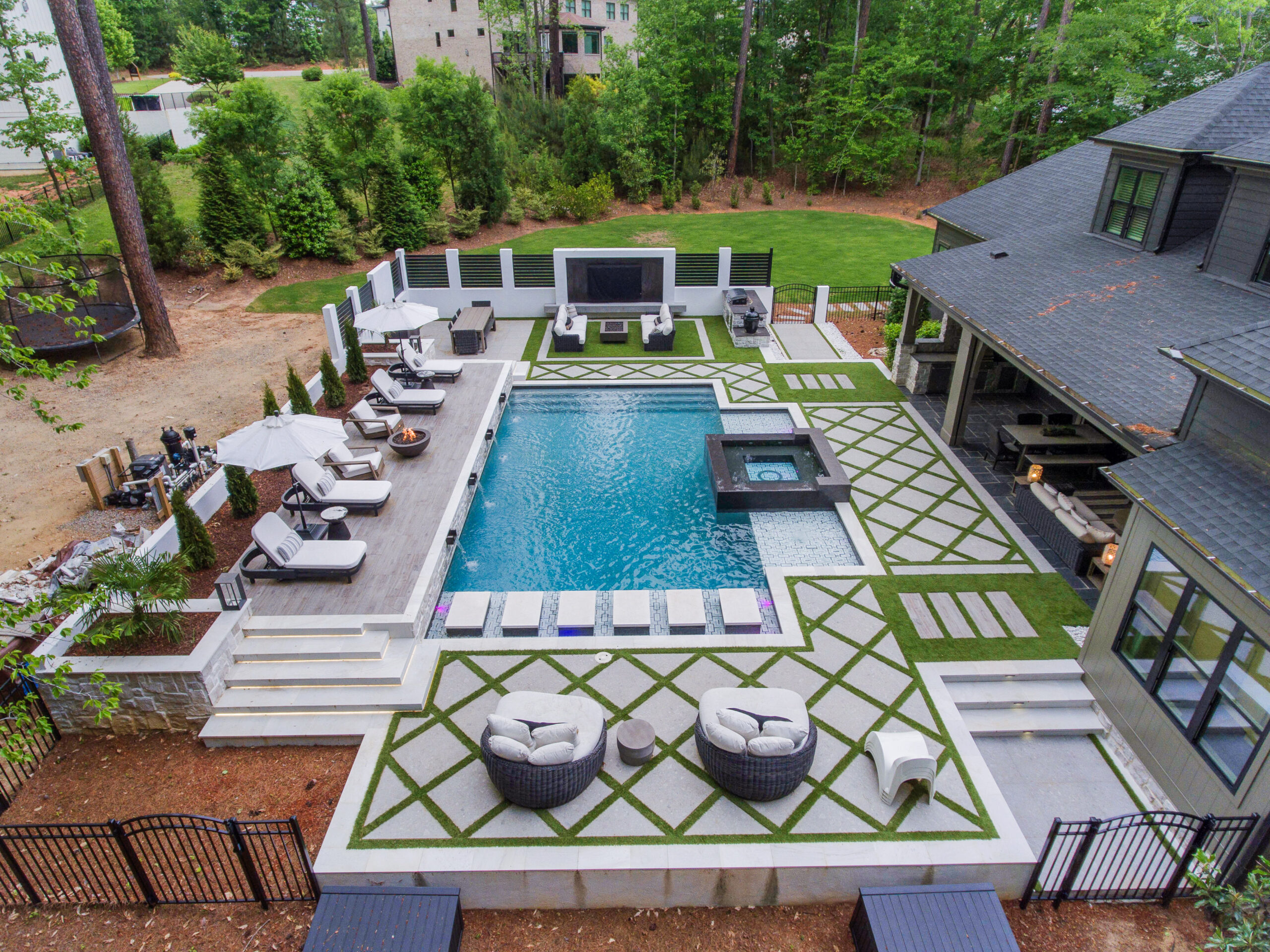
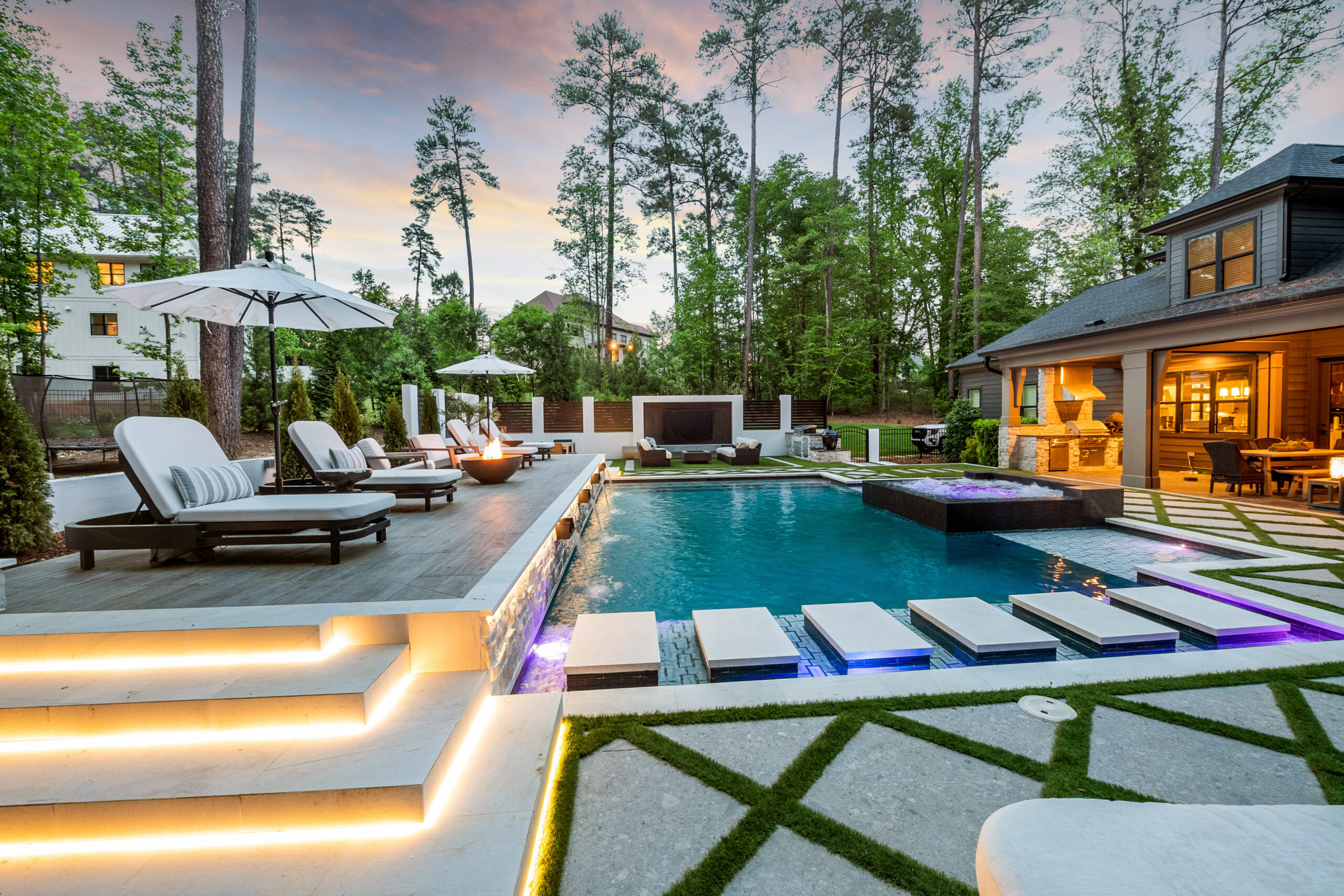
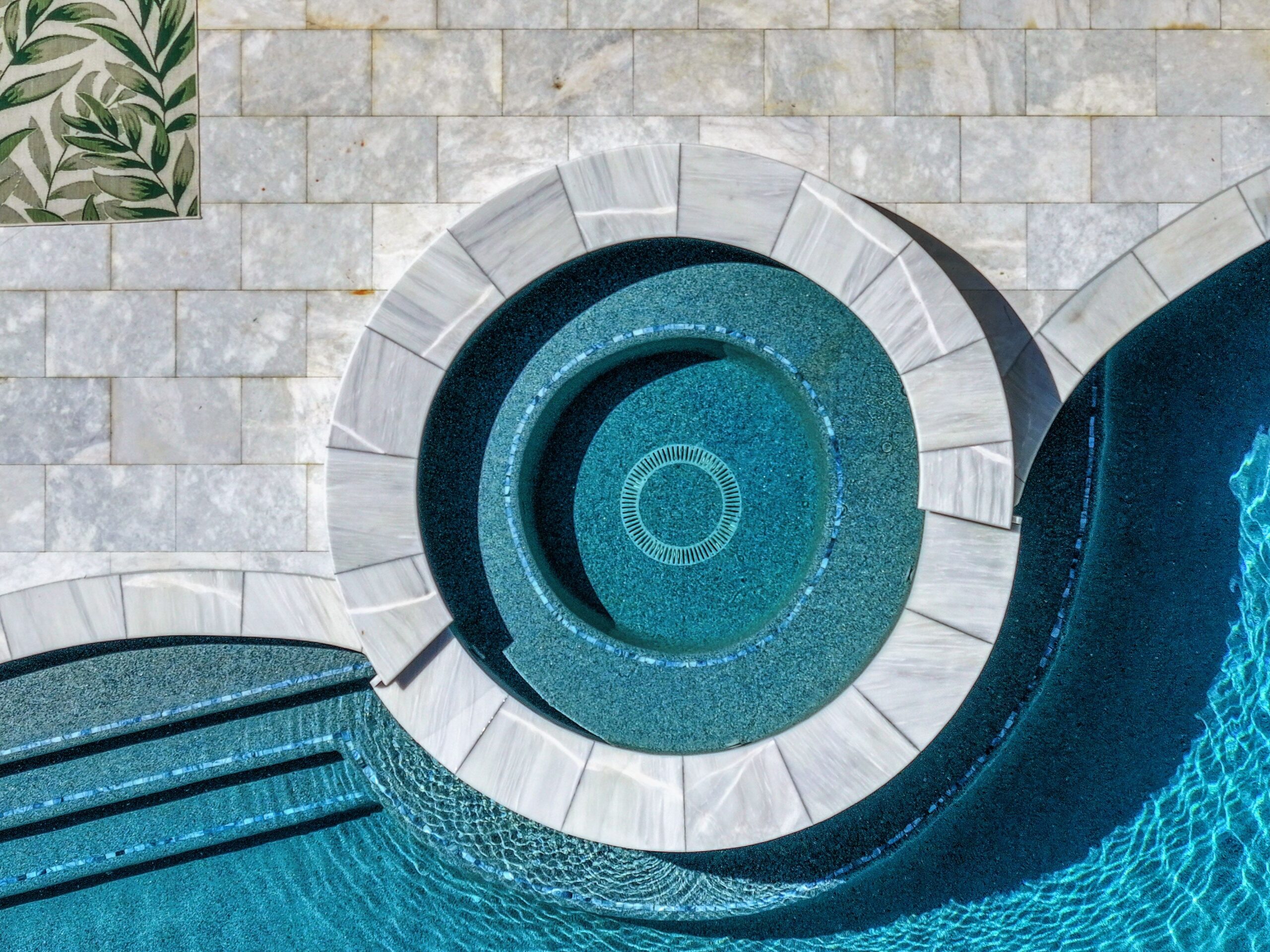

The moment most Triangle homeowners begin researching luxury pool cost North Carolina builders actually charge, they encounter a range that seems impossibly wide. One builder quotes a figure that feels attainable. Another comes in two or three times higher for what appears to be a similar project. The variation is not random, and it is not explained simply by one builder being more expensive. It is explained by scope, site, and what the word “luxury” actually means when applied to a custom-built outdoor environment.
In Cary, Durham, and Chapel Hill, the investment in a luxury pool reflects something more layered than a rectangular body of water with a concrete surround. It reflects the specific lot, the architectural relationship between the pool environment and the home, the engineering required to work within the terrain, and the degree to which the finished environment is designed as a unified backyard rather than a collection of added features. Understanding those drivers before the first design conversation is the difference between arriving prepared and arriving confused.
This guide walks through what shapes luxury pool cost in the Triangle, what homeowners at different investment levels should expect, and how the process works when a design-build partner is leading the project from initial concept through the final swim.
What Actually Drives Luxury Pool Cost in North Carolina
Luxury pool pricing in the Triangle is not principally driven by profit margins or regional markup. It is driven by scope and complexity, and both of those variables are highly specific to each property and each homeowner’s vision.
The design and engineering phase is where the cost of a luxury pool first takes shape. A pool designed to complement a contemporary home in a newer Cary neighborhood requires a different design conversation than a pool sited on a sloped, wooded lot in Chapel Hill. Both begin with custom architectural drawings, structural engineering, and site assessment. Neither is a commodity starting point. The time and expertise invested before excavation begins represents real value, and it is why design-build relationships produce better outcomes than design-bid-build processes in which a homeowner hires an architect separately and then solicits bids from contractors working off someone else’s vision.
Beyond design, the major cost drivers in a luxury pool project are site preparation, pool shell and finish selection, water features and automation, hardscape and outdoor living integration, and electrical systems. Each category carries a wide range depending on the scope of choices made within it. A plaster interior finish costs less than a glass tile finish. A basic paver surround costs less than a full outdoor living environment with an outdoor kitchen, fire features, and custom lighting. The pillar that holds all of these choices together is the design intent established early in the process.
The Major Investment Categories in a Custom Triangle Pool
Design, Engineering, and Planning
A high-end pool project begins with a thorough site assessment, custom 3D design work, and structural engineering that accounts for soil conditions, drainage patterns, utility locations, and setback requirements. In the Triangle, where lot conditions vary significantly across neighborhoods and municipalities, this phase is not a formality. It is the foundation on which every subsequent decision rests. Skipping or minimizing design investment is the most common reason ambitious backyard visions fall short of their potential in execution.
Excavation, Site Preparation, and Structural Work
Site preparation costs are highly variable because they depend on what the ground reveals. Clay-heavy soil in parts of the Triangle requires different management than sandy loam. Sloped lots in Durham or Chapel Hill may require retaining walls, drainage infrastructure, and additional engineering that a flat lot in Cary would not. Access challenges, mature trees, and existing landscaping all affect excavation complexity. These are costs that cannot be estimated accurately without a site visit, which is one reason reputable design-build partners will not quote a project from a phone call.
Pool Shell, Interior Finish, and Coping
The pool shell in a luxury project is almost always gunite, a method that allows complete freedom of shape and finish selection. Interior finish options range from standard white plaster to pebble aggregates, quartz blends, and full glass tile installations. Each choice has a different cost, a different maintenance profile, and a very different visual result. Coping selection, whether travertine, limestone, bluestone, or custom tile, shapes the aesthetic character of the pool’s edge as much as any single decision in the design. These finish choices are where luxury becomes visible and where the investment reflects the level of detail the homeowner is designing toward.
Water Features, Automation, and Lighting
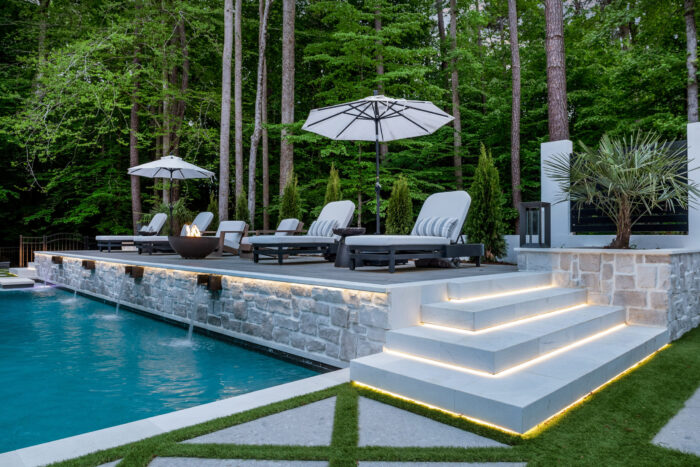
Sheer descent waterfalls, scuppers, bubblers, spillover spas, and fire features all add to the total investment while dramatically changing the experience of the finished environment. Smart automation allows the entire system, pool temperature, spa jets, lighting scenes, water features, and filtration schedules, to be managed from a single app. Architectural LED lighting creates programmable environments at any hour. These are not optional extras in a luxury project. They are the elements that distinguish a pool that functions from a backyard that performs.
Hardscape, Outdoor Living, and Integration
The outdoor living scope surrounding a luxury pool is often where the investment range diverges most significantly between projects. A pool with a basic paver deck and no additional outdoor living elements sits at one end of the spectrum. A complete backyard environment with an outdoor kitchen, dining and lounge areas, a pergola or pool house, a fire pit, and landscape lighting sits at the other. In the Triangle’s luxury residential market, most homeowners are designing toward the latter, because the investment in the water feature alone does not realize its full potential without the environment around it.

Triangle-Specific Factors That Shape the Investment
The Triangle’s geography, building culture, and homeowner base all affect what a luxury pool project requires here compared to other markets.
Cary’s established neighborhoods often include mature trees that complicate access, HOA overlay requirements that govern design choices, and utility infrastructure that must be carefully coordinated before excavation begins. Durham’s terrain ranges from relatively flat to surprisingly rolling, with older residential neighborhoods presenting infrastructure variables that newer developments do not. Chapel Hill’s wooded, hilly character means that retaining walls, drainage systems, and structural engineering are frequently required on lots that would have been straightforward in a flatter market.
The Triangle also sits in a climate zone where the outdoor season is meaningfully longer than markets further north, which raises the stakes for investing in the environment well. A well-designed backyard in Cary, Durham, or Chapel Hill can be actively used from April through October and meaningfully enjoyed even through mild winter months with the right features. That extended season changes the return-on-investment math considerably compared to a five-month swimming climate.
Permitting timelines also vary by municipality. Cary, Durham, and Chapel Hill each have their own building departments, review cadences, and inspection protocols. Understanding the permit process in the Triangle, and how to navigate it efficiently, is part of what an experienced local design-build partner brings to every project. For a full walkthrough of the permitting process across these three municipalities, see our guide to pool permits in Cary, Durham, and Chapel Hill.
What a Luxury Pool Investment Looks Like in the Triangle
The Triangle luxury pool market reflects a homeowner base that is investing in a long-term lifestyle upgrade, not a commodity backyard feature. A thoughtfully designed and built custom pool in this market is not a purchase that depreciates in the first year of ownership. When the design is architectural, the finish is durable, and the outdoor environment is integrated with the home’s character, the investment adds meaningful long-term property value in addition to the daily-use value it creates.
Scoped appropriately, a custom gunite pool with quality finishes and a modest outdoor living surround represents a foundational investment. Add water features, automation, an integrated spa, and a full hardscape environment with outdoor kitchen and lighting, and the project scope shifts substantially. The budget for a full backyard environment in a luxury Triangle neighborhood reflects the engineering, craftsmanship, and design work that goes into every phase of the build.
Rather than anchoring to a specific number before a site visit, the most productive approach is to enter the design consultation with a clear picture of your priorities, your property’s constraints, and the environment you want to create. A skilled design-build team will shape a scope that reflects all three. For a more detailed breakdown of where budget dollars go within a luxury pool project, see our custom pool cost breakdown for Triangle homeowners.

The Design-Build Difference in a High-Investment Project
The design-build model matters more in high-investment projects than in any other context. When the team that creates the design also manages the build, every cost decision is made with full knowledge of how it affects the finished environment. There are no gaps between what the designer intended and what the builder executed. There are no contractors interpreting someone else’s drawings and making field substitutions that compromise the design.
Jim Hinson Pools has operated on this model since 1970, self-performing over 80 percent of construction work in-house. That continuity means the relationship between finishes, structural work, plumbing, and electrical is managed by a team with shared institutional knowledge, not coordinated across separate subcontractors who have never worked together on a project of this scope. For homeowners in Cary, Durham, and Chapel Hill making a significant backyard investment, that matters.
Understanding what a project like this requires before the first conversation also means understanding the timeline. Custom pool construction in the Triangle follows a nine-to-twelve month design-to-completion arc under normal conditions. For a detailed look at what happens during each phase, see our guide to the pool construction timeline in Cary, Durham, and Chapel Hill.
Your Complete Resource for Planning a Triangle Luxury Pool
This guide is the first in a four-part series designed to give Triangle homeowners a complete picture of the luxury pool investment before they begin the design process. Each post goes deeper into a specific aspect of the build:
- Our custom pool cost breakdown for Triangle homeowners covers every major budget category in detail, including what commonly gets overlooked in high-end builds and what is specific to the Triangle’s soil, terrain, and site conditions.
- Our pool construction timeline guide walks through each phase of the build from design through completion, explaining what is happening at each stage and what local factors affect the schedule in Cary, Durham, and Chapel Hill.
- Our guide to the pool permit process in Cary, Durham, and Chapel Hill explains setbacks, easements, drainage requirements, utility locates, and HOA considerations, and positions the permitting journey as something a knowledgeable design-build partner can navigate with you.
Together, these four posts are designed to walk any Triangle homeowner from initial curiosity through informed readiness, so that the first design conversation is a productive one.
A Pool That Belongs to This Property, and This Life
The most compelling luxury pool environments in Cary, Durham, and Chapel Hill share one quality: nothing about them feels added. The water, the stone, the light at dusk, the sound of moving water from a seamlessly integrated spa, all of it reads as original to the property. That quality of belonging is not accidental. It is the result of a design process that starts with the home’s architecture, the lot’s character, and the family’s actual habits, and builds outward from there.
Understanding luxury pool cost in North Carolina is the first step toward building something like that. The second step is a conversation with a team that has been doing this work in this region since 1970, with the design depth, the construction experience, and the self-performed craftsmanship to see the vision through. For homeowners in Cary, Durham, and Chapel Hill, that second step starts here.

Frequently Asked Questions
What is the general investment range for a luxury pool in Cary, Durham, or Chapel Hill?
Luxury custom pool projects in the Triangle span a wide range depending on scope, site conditions, finish selections, and the extent of outdoor living integration. Projects anchored around a custom gunite pool with quality finishes and modest outdoor living begin at one level; full backyard environments with outdoor kitchens, automation, water features, spas, and architectural lighting represent a substantially higher investment. The most accurate estimate for any project comes from a site visit and design consultation, not from general research.
What is the single biggest driver of luxury pool cost in the Triangle?
Site complexity and outdoor living scope are the two variables that most commonly account for wide cost differences between projects that appear similar on the surface. A steeply sloped Chapel Hill lot with drainage requirements and retaining walls will cost significantly more to prepare than a flat Cary lot with uncomplicated access. Similarly, a pool integrated into a full outdoor living environment costs substantially more than a standalone pool, because the design and construction scope is fundamentally different.
Should I include a spa, water features, and outdoor kitchen in the original build?
Yes, in almost every case. Designing and building these features as part of the original project, rather than adding them after construction, is nearly always more cost-effective. The infrastructure, plumbing, electrical conduit, and structural work are shared, the equipment is sized correctly from the beginning, and the design intent is preserved throughout the build. Retrofitting features after the hardscape is complete typically costs more and produces compromises in placement and integration that the original design could have avoided.
How long does a luxury pool project take from start to finish in the Triangle?
The full arc from initial design consultation through pool completion is typically nine to twelve months under normal conditions. This timeline reflects design development, permitting, and construction sequencing, all of which involve dependencies and local variables. Starting the design conversation early in the fall positions a project well for a summer completion the following year. Our detailed guide to the pool construction timeline in Cary, Durham, and Chapel Hill breaks this down phase by phase.
Does working with a design-build firm cost more than working with a separate designer and contractor?
Not inherently, and the design-build model often produces better outcomes at comparable total investment. When the team that designs a project also builds it, there are fewer coordination gaps, fewer field substitutions, and a tighter relationship between design intent and finished result. For a project at the scale and complexity of a luxury custom pool, that continuity has real value.
Ready to Start Your Design Conversation?
Schedule a design consultation with Jim Hinson Pools to begin your backyard vision with a team that has designed and built custom aquatic environments across North Carolina since 1970. Every project starts with a site visit and a conversation about what you want to create, not a catalog of pre-built options.