



Most Triangle homeowners who request a custom pool estimate expect to receive a single number. What they get, from any reputable builder, is a conversation. That conversation exists because a custom pool cost breakdown is not a line item. It is a document that reflects dozens of decisions, most of which have not yet been made when the first meeting occurs.
Understanding what each category of that budget represents, and why the decisions within it matter, prepares a homeowner to engage that conversation productively rather than reactively. This guide covers every major cost component in a high-end Triangle pool build, notes what commonly gets overlooked even in carefully planned projects, and identifies the Triangle-specific factors that affect pricing here in Cary, Durham, and Chapel Hill more than in other markets.
For a broader overview of what shapes the overall investment range in the Triangle, see our guide to luxury pool cost in Cary, Durham, and Chapel Hill.
Design and Engineering: Where Every Budget Begins
The design and engineering phase of a custom pool project is the least visible and most consequential part of the budget. Before any ground is broken, a qualified design-build partner is producing custom architectural drawings, completing a site assessment, coordinating structural engineering, and developing the three-dimensional design that will govern every decision that follows.
In the luxury residential market, design fees typically represent a meaningful percentage of the total project investment. That percentage is worth every dollar when the alternative is proceeding without thorough site analysis and ending up with cost surprises during excavation, a pool oriented incorrectly relative to the home’s architecture, or a design that does not comply with local setback or drainage requirements. The design phase is also when outdoor living features, water features, and automation are planned in coordination with the pool, rather than added later at greater cost.
A design-build firm handles this phase as part of an integrated project rather than outsourcing it to a separate architect. That integration means the designer understands exactly what the builder will encounter on site, which produces more accurate pre-construction budgets and fewer mid-project adjustments.

Site Preparation: What Hides Below the Surface
Site preparation is the budget category that produces the most genuine surprises in Triangle pool projects, because it is the category most dependent on conditions that are not fully known until excavation begins.
Soil Conditions and Structural Bearing
The Triangle’s soil varies considerably across neighborhoods and lot types. Clay-heavy soils in parts of Wake and Durham counties expand and contract with moisture changes, requiring different structural approaches than sandy or loam-rich soils in other areas. Some lots require soil amendment or additional structural support under the pool shell. These conditions are identified during the site assessment phase and priced into the project estimate, but they represent a genuine variable that flat-lot assumptions will miss.
Retaining Walls and Drainage Infrastructure
Sloped lots in Chapel Hill and Durham frequently require retaining walls to create level pool environments within the existing grade. A well-designed retaining wall is not an afterthought. It is an architectural element that shapes the entire backyard and, done correctly, becomes one of the most beautiful features of the finished environment. The engineering, materials, and labor required for significant retaining work add meaningfully to site preparation costs, but they are not avoidable on lots where grade change is a reality.
Drainage infrastructure, catch basins, French drains, and surface drainage management, is frequently required regardless of lot slope, particularly in older neighborhoods where existing drainage infrastructure may already be at capacity. Addressing drainage at the project stage is far less expensive than addressing it after the pool is built and the hardscape is installed.
Access and Tree Management
Equipment access to the build site directly affects excavation cost and timeline. Properties with narrow side gates, mature landscaping, or restricted access points require different approaches than properties with wide-open lot access. Tree removal, root management, and landscape protection during excavation all carry costs that are property-specific and not captured in a generic estimate.
Pool Shell, Interior Finish, and Coping
The pool shell in a luxury Triangle project is virtually always gunite, a pneumatically applied concrete that allows complete freedom of shape, depth variation, and interior finish selection. Fiberglass pools, which are manufactured off-site in fixed shapes, occupy a different market segment entirely and do not reflect the design intent of a true custom project.
Interior finish selection is one of the most visually impactful decisions in the entire project. Standard white plaster represents one end of the spectrum. Quartz aggregate finishes add texture, color range, and durability. Full glass tile installations, which can extend across the entire pool surface or be applied as accent bands and waterline treatments, represent the highest end of the finish spectrum and transform the visual character of the water entirely.
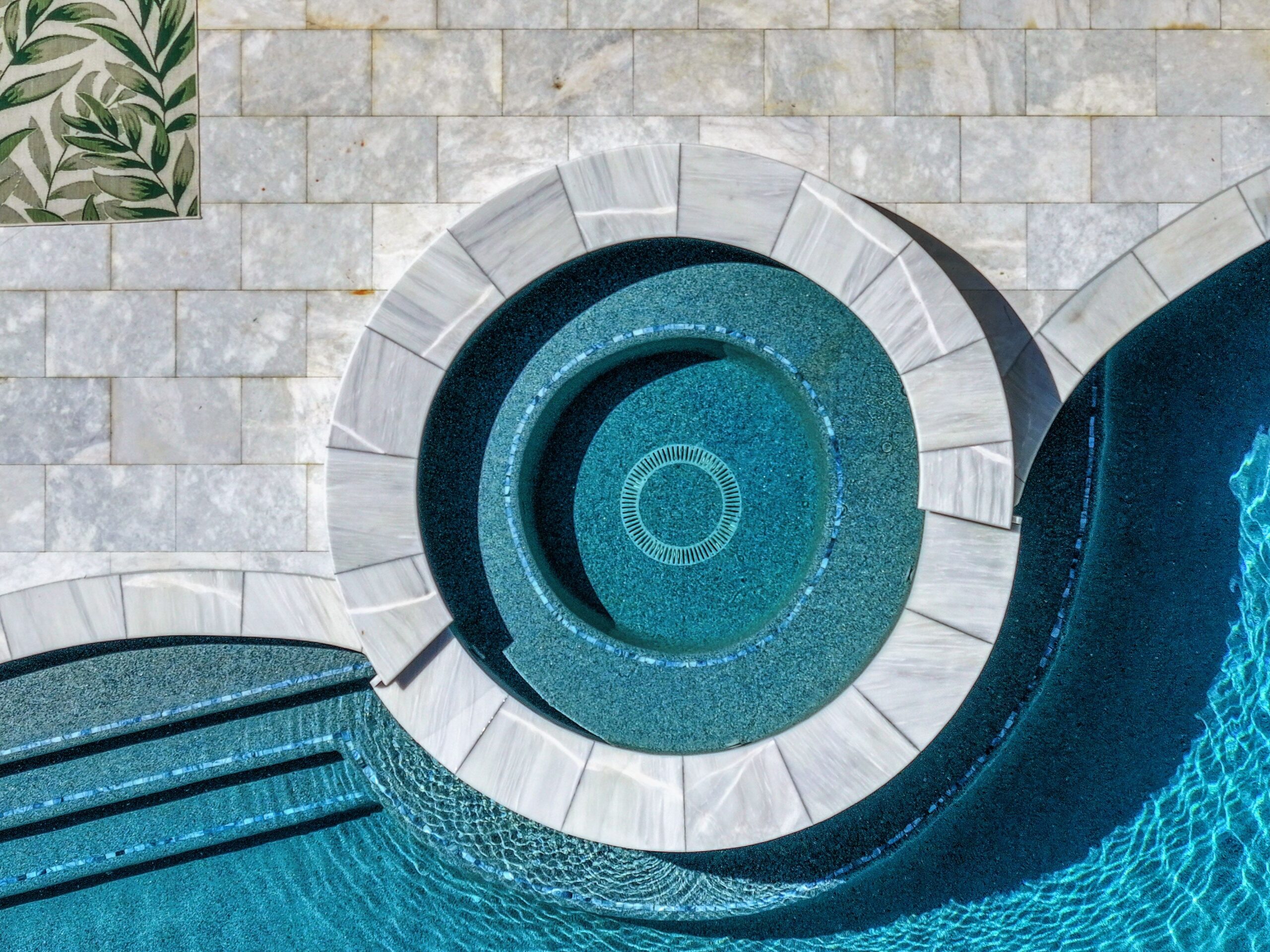
Coping, the cap material along the pool’s edge, is another finish decision with significant aesthetic and cost implications. Travertine, limestone, bluestone, and custom porcelain tile all read differently and carry different price points. The coping choice also needs to coordinate with the decking material, the pool’s interior finish, and the architectural language of the home.

Water Features, Automation, and Lighting
Water features, automation systems, and architectural lighting are the categories where a luxury pool most clearly differentiates itself from a standard backyard installation. Industry data from the Pool and Hot Tub Alliance indicates that these technology and feature upgrades represent an increasing share of total project investment as the market matures, and the Triangle’s homeowner base reflects that trend.
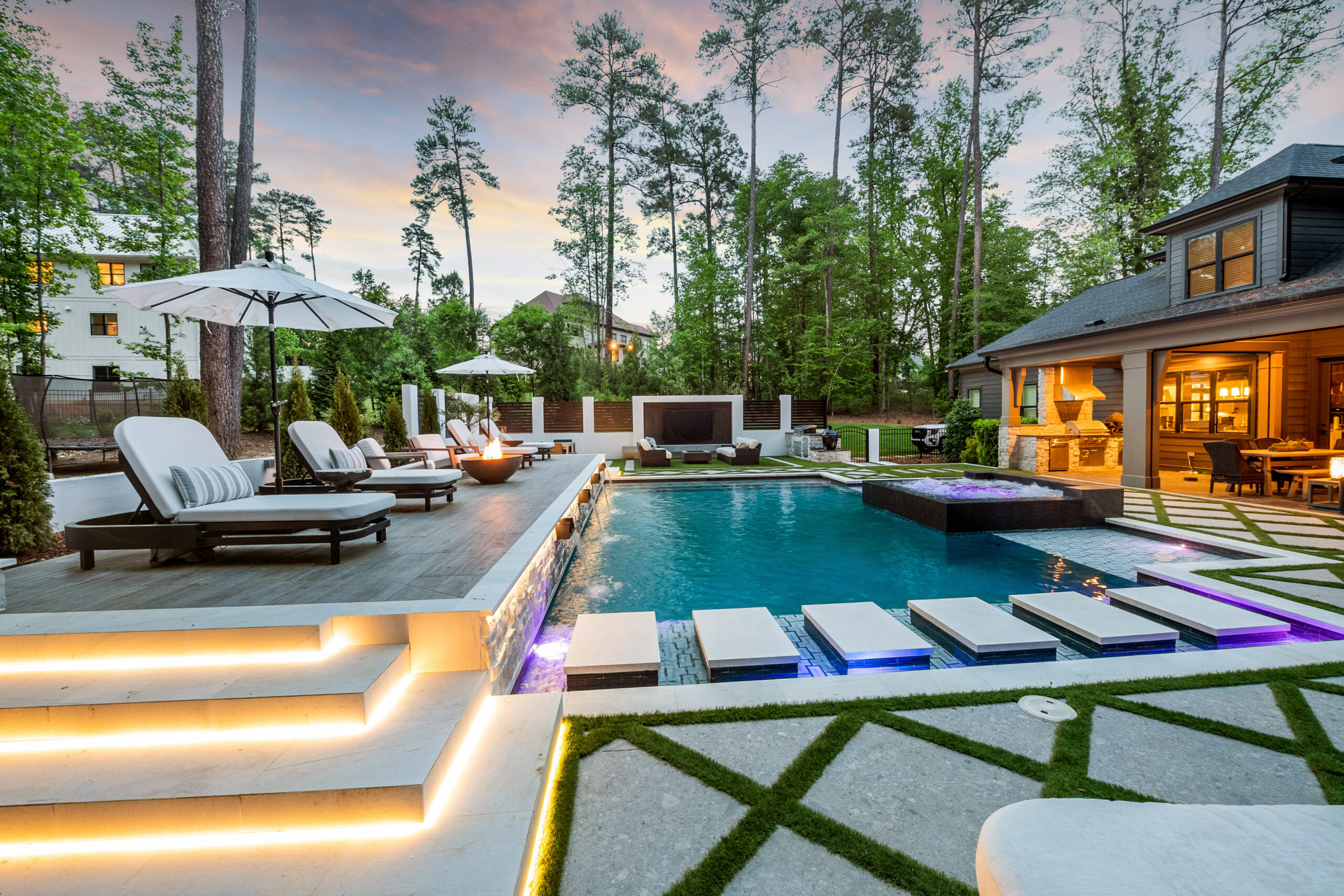
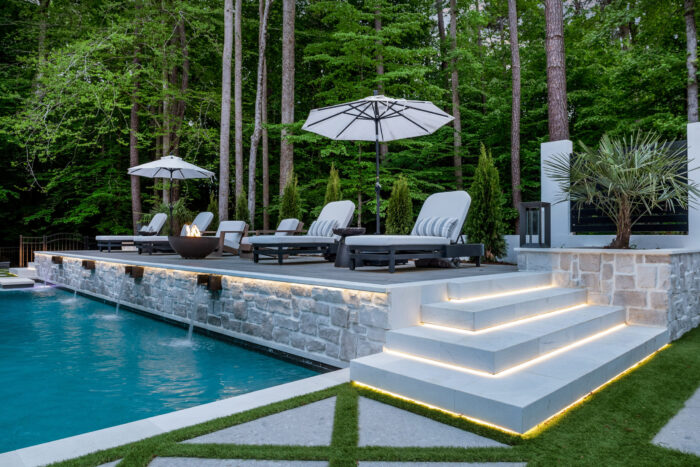
Water features, including sheer descent waterfalls, scuppers, bubblers, and spillover spas, add movement, sound, and visual depth to the finished environment. Their cost reflects both the materials and the plumbing and structural work required to support them. Features planned during the design phase are integrated into the overall plumbing design; features added post-construction require reopening hardscape and often cost significantly more.
Automation systems that manage lighting, temperature, water features, spa jets, and filtration from a single app have become a standard expectation in luxury pool projects. The hardware and programming investment is substantial, but the ongoing quality-of-life return, a pool that is always ready when the homeowner is, is the feature most frequently cited by homeowners in post-completion conversations.
Architectural LED lighting, designed as a programmable environment rather than a functional safety measure, is the single feature that most dramatically changes the character of the backyard after dark. Lighting placement, fixture selection, and scene programming are design decisions that deserve real attention during the planning phase.
Hardscape, Outdoor Living, and Outdoor Kitchen Integration
The outdoor living environment surrounding the pool is where the budget range in Triangle luxury projects diverges most significantly. A pool with a basic paver deck and no additional features represents a fundamentally different project scope than a complete backyard environment.
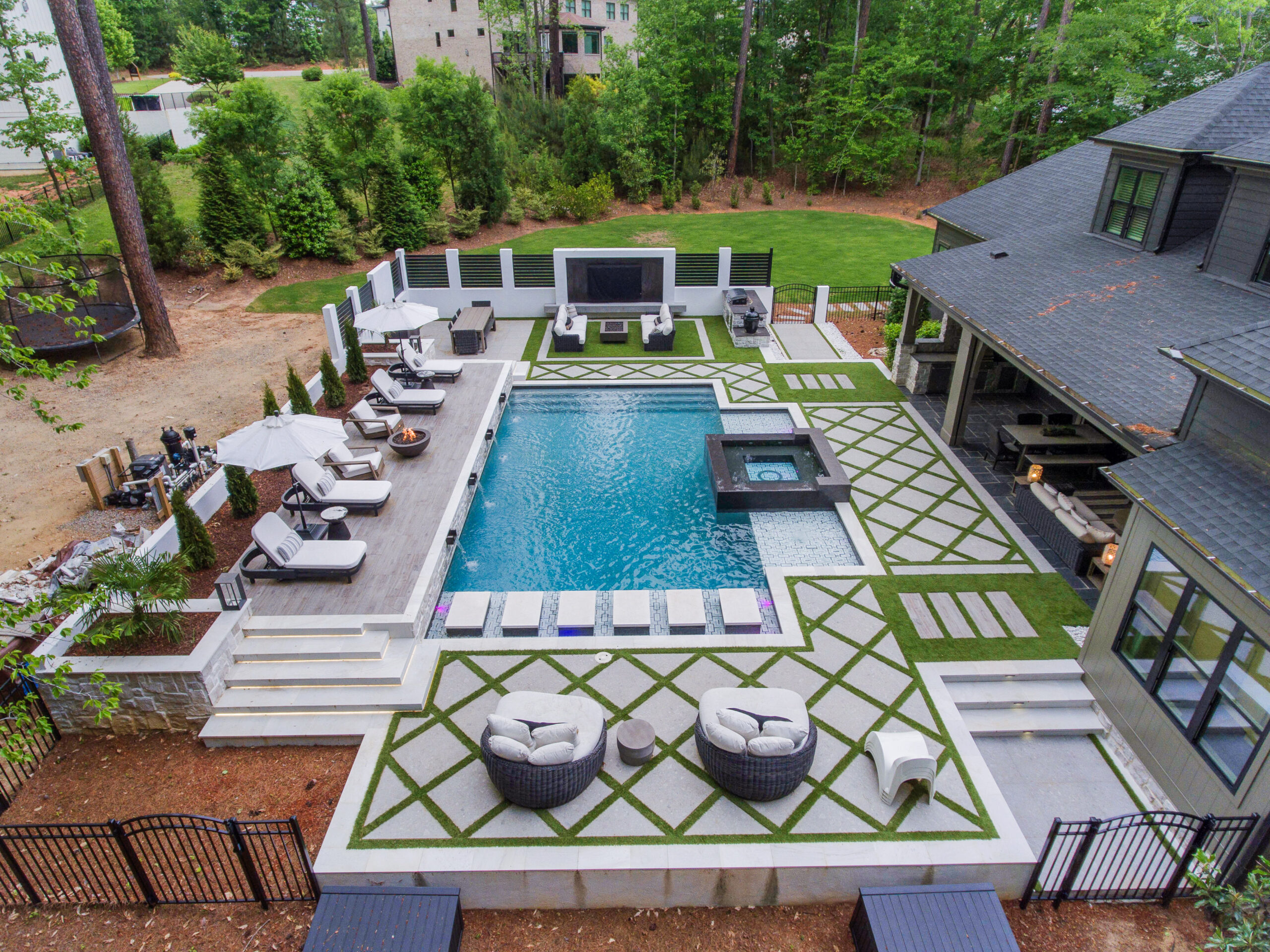
Decking and hardscape materials, from natural stone pavers to porcelain tile to concrete with custom banding, vary in cost and aesthetic character. The volume of material required for a large deck, combined with installation labor, base preparation, and drainage accommodation, makes this a substantial line item even in projects without elaborate outdoor living features.

What Commonly Gets Overlooked in High-End Triangle Builds
Even carefully planned luxury pool projects in Cary, Durham, and Chapel Hill encounter line items that were underestimated or missed in early conversations. The most common ones:
- Electrical service upgrades. High-end automation, heating systems, and lighting can require a service upgrade or dedicated panel that was not anticipated in the initial scope. This is identified during design, but it is a surprise for homeowners who assumed their existing electrical service was sufficient.
- Fence and gate requirements. North Carolina pool code requires a barrier meeting specific height and latch specifications. HOA requirements may impose additional standards. Fence cost is frequently not included in early pool estimates and then surfaces as a separate line item.
- Landscape restoration. Excavation and construction traffic affect the surrounding yard considerably. Regrading, sod replacement, and landscape restoration after construction is complete are costs that represent real money and are sometimes underestimated or excluded from initial proposals.
- Permits and inspections. Permit fees vary by municipality and project scope. Inspection scheduling can also affect timeline in ways that carry cost implications if trade sequencing is disrupted.
- Start-up chemistry and equipment commissioning. The initial chemical balance and equipment commissioning for a new pool is a specialized process. Some builders include this; others treat it as a separate post-construction service.
Triangle-Specific Factors That Affect Your Budget
Building a luxury pool in Cary, Durham, or Chapel Hill carries some cost factors that are specific to this market and may not appear in national cost data or estimates from builders without local experience.
Soil composition in the Triangle is more variable than many homeowners expect. Clay-heavy soils in parts of Cary and Durham require careful management during excavation and pool shell construction. The expansive nature of clay soil means structural engineers take a more conservative approach here than they might in sandier markets, which adds to engineering and construction costs but produces a more durable finished result.
Elevation changes are a characteristic of much of Chapel Hill and parts of Durham’s older residential neighborhoods. Lots with significant grade change require retaining infrastructure that adds to site preparation costs, but also creates tiered backyard environments with architectural interest that flat lots cannot achieve. The investment in getting the grades right, with proper retaining, drainage, and structural support, pays dividends in both durability and visual character.
Mature tree coverage, common throughout the Triangle’s established neighborhoods, creates both access and root challenges. Tree removal, root protection, and canopy management around excavation zones add to project cost and require coordination that bare-lot projects do not.
If you are building in Cary specifically, our dedicated page for custom pools in Cary, NC covers what local homeowners should know before beginning the process: jimhinsonpools.com/cary-nc/.
Budget Clarity Before Ground Breaks
A thorough custom pool cost breakdown is not a negotiating document. It is a planning tool. Homeowners who understand what each line item represents, why site preparation costs vary, what finish decisions drive the greatest visual impact, and what gets missed in initial conversations arrive at the design phase with the context to make confident decisions rather than reactive ones.
Jim Hinson Pools has been building custom aquatic environments across North Carolina since 1970. Every project begins with a site visit and a design conversation anchored in what the specific property requires and what the homeowner actually wants to build. That conversation produces a budget that reflects reality, not a best-case scenario that changes once excavation begins.
See What Your Project Actually Requires
Request a project budget walkthrough with the Jim Hinson Pools team to understand exactly what your Cary, Durham, or Chapel Hill backyard requires, line by line, before any commitments are made.