

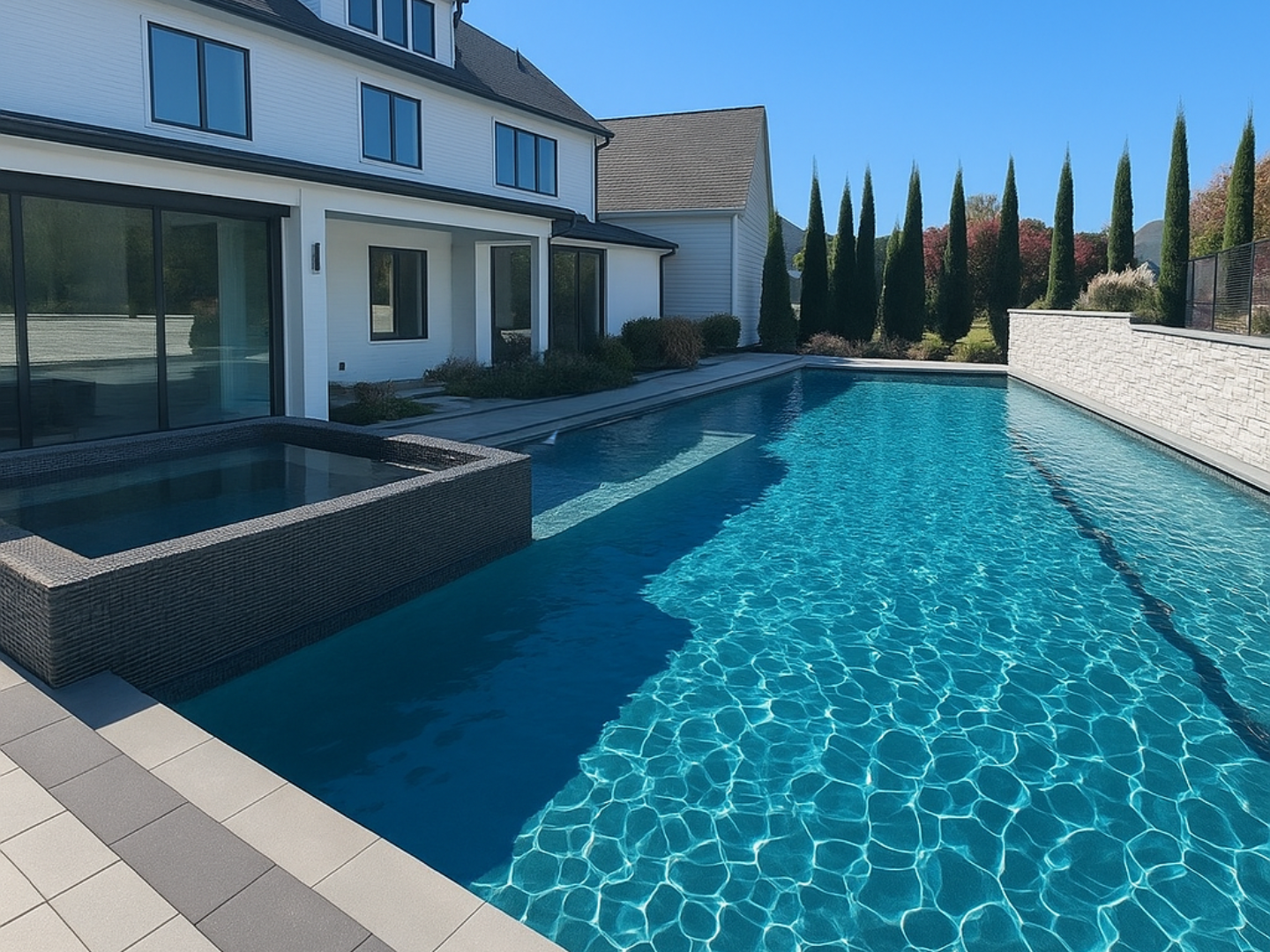
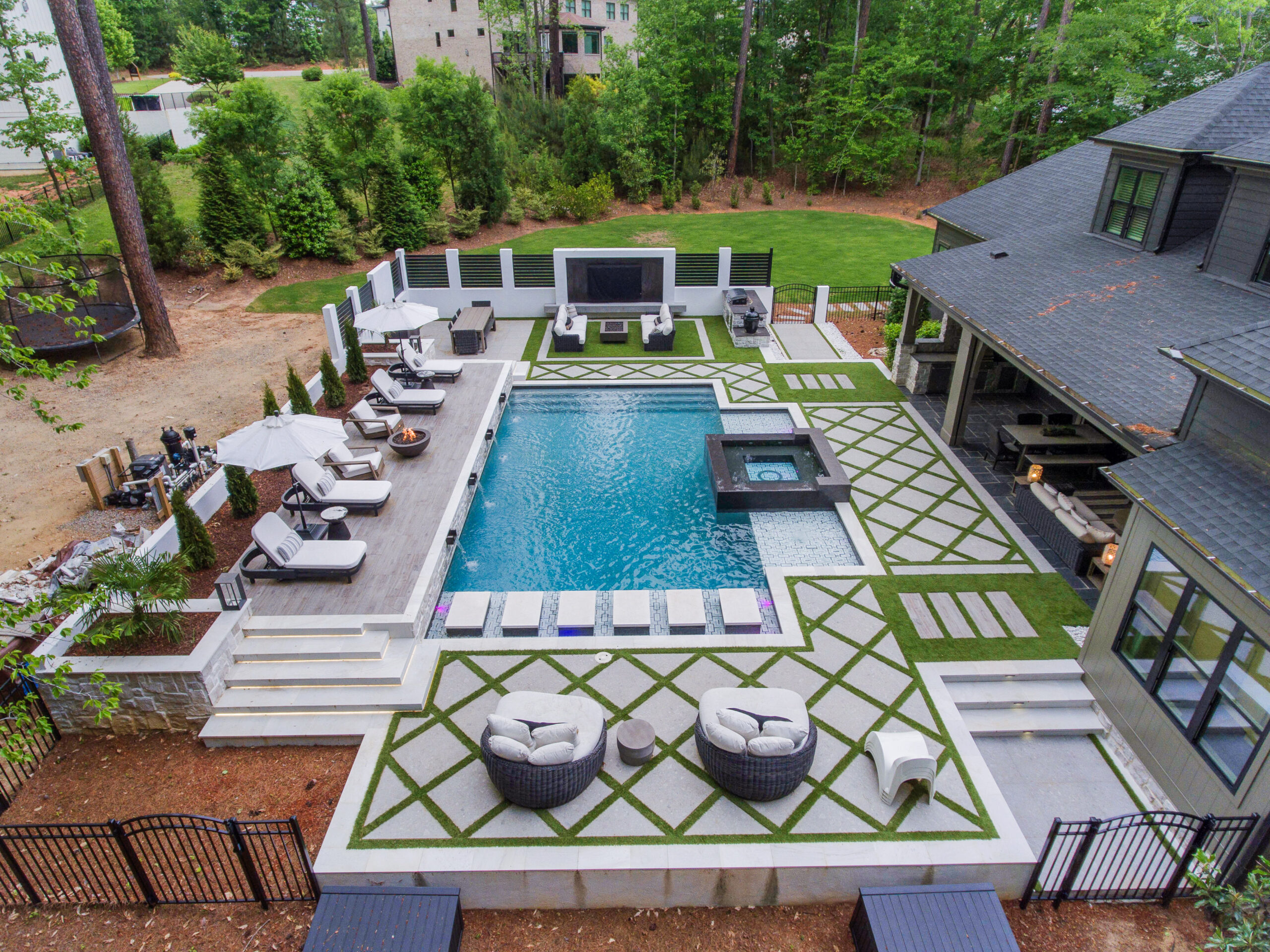
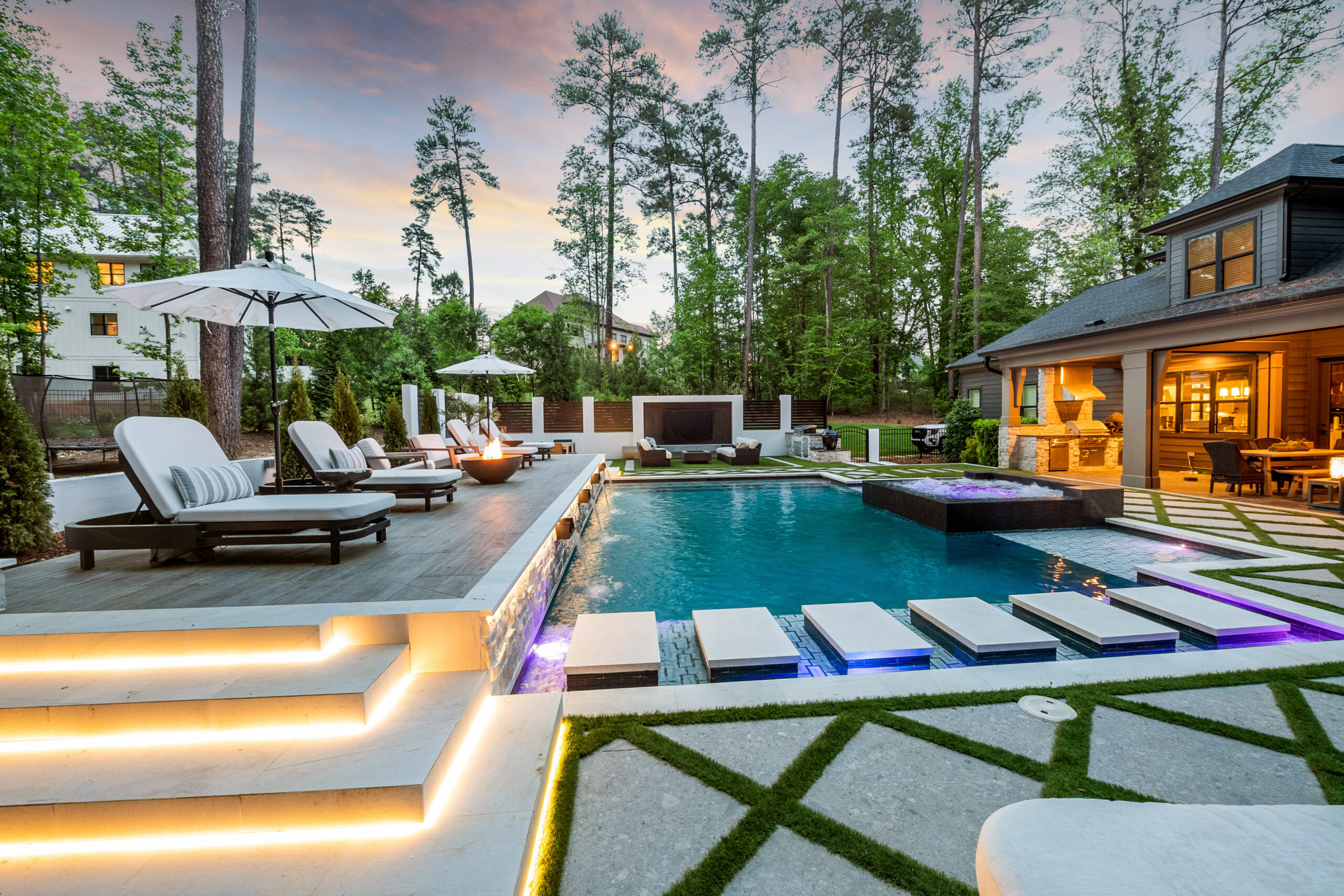
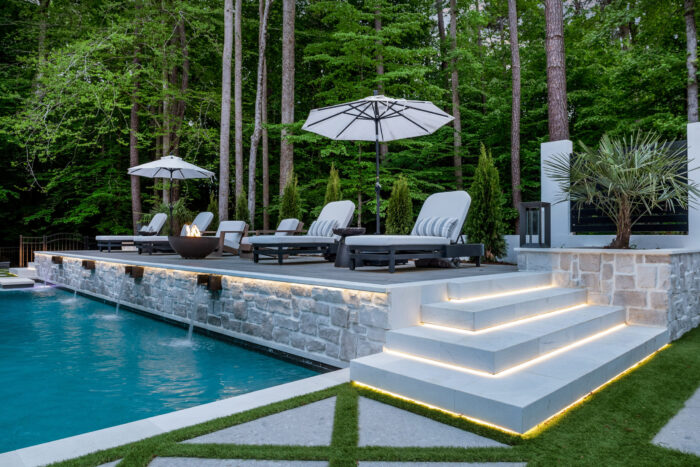
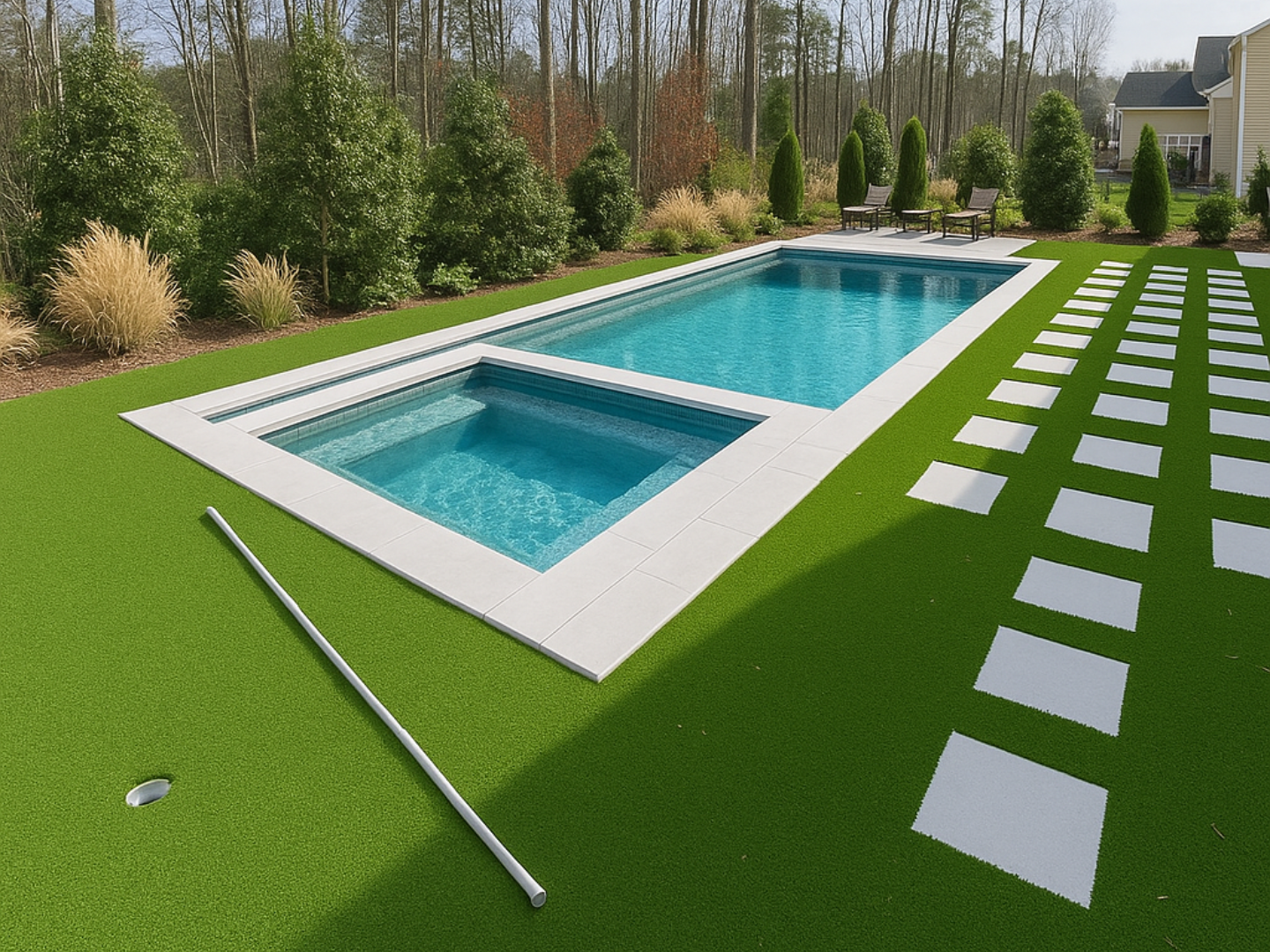
Thoughtful planting is one of the most effective ways to elevate the space around a custom pool. Stone, porcelain, and tile define the structure of the deck, but landscaping is what softens those edges, adds dimension, and helps the environment feel complete. For homeowners investing in a tailored backyard experience, planting is not a finishing touch. It is part of the design language from the beginning.
That is especially true when choosing native plants for pool landscaping in North Carolina. The right planting palette can handle the region’s humidity, summer heat, and seasonal weather shifts while creating a backyard that feels connected to the surrounding property. Instead of fighting the climate, native and climate-adapted species work with it.
When these elements are planned early, planting becomes part of a cohesive composition alongside hardscape, lighting, and spatial flow. If you are exploring how these decisions come together, our guide to pool deck landscaping ideas in North Carolina offers a broader look at how architecture, water, and landscape can work in harmony.
Why Native Plants Make Sense Around North Carolina Pools
Pool environments create very specific conditions. Surfaces reflect heat. Foot traffic is constant. Water, sun exposure, and airflow can vary dramatically from one side of the yard to the other. At the same time, homeowners want the area to stay polished without turning upkeep into a weekly project.
That is why native plants around a pool are often such a strong choice. Species that have already adapted to North Carolina’s climate and soils tend to perform more reliably in these demanding environments. Once established, many require less irrigation, hold up better through the summer, and offer greater resilience against regional pests and disease pressures.
For luxury homes, this has practical and aesthetic value. A healthy landscape keeps the pool setting looking refined, but it also reduces the visual wear that comes from stressed plants, patchy beds, and constant replacements. When the landscape settles in well, the entire backyard feels more intentional.

What to Consider Before Choosing Pool Landscaping Plants in North Carolina
Before selecting specific pool landscaping plants in North Carolina, it helps to think about how the planting will function within the full outdoor environment. The best pool landscapes are not just beautiful at install. They continue to support circulation, maintenance, privacy, and architectural balance over time.
Debris and Cleanliness
Some plants are visually appealing but not ideal near water. Trees or shrubs that drop excessive leaves, berries, pods, or pollen can quickly increase maintenance and put more strain on filtration systems. Around a pool, cleaner growth habits usually make for a better long-term experience.
Root Behavior
Roots matter more than many homeowners realize. Certain species can shift hardscape, interfere with nearby structures, or create issues over time if planted too close to decking and retaining elements. Stable, predictable root systems are usually preferred around the pool perimeter.
Views and Sightlines
Good landscaping frames the pool without closing it in. Planting should preserve important views from the house and from outdoor living areas while still adding softness, texture, and privacy where needed. Layered planting is often the most effective way to achieve that balance.
Shade and Microclimate
A well-designed landscape can improve comfort beyond looks alone. Strategically placed trees or taller plantings can create relief near seating areas and outdoor lounges while still allowing sunlight to reach the water. These microclimate decisions can make a backyard feel significantly more usable during the warmest parts of the year.
Native Plants That Complement Luxury Pool Landscapes
A strong planting palette should do more than fill space. It should reinforce the architecture, add seasonal interest, and support the clean, composed feel of the backyard. There are many native plants for pool landscaping that bring structure and softness without overwhelming the design.
Ornamental Grasses for Movement and Texture
Ornamental grasses work especially well around pools because they introduce motion and soften the harder lines of the deck. Their texture catches light beautifully, and many varieties provide a clean, elegant look that fits modern and transitional homes.
Muhly grass is often favored for its airy form and seasonal color. Switchgrass adds vertical interest and structure, while little bluestem can contribute a more natural but still curated feel. These grasses are also useful when you want visual softness without creating excessive debris near the water.
Evergreen Shrubs for Year-Round Structure
Evergreens help anchor the landscape visually and can provide valuable screening around outdoor living spaces. They keep the design feeling full throughout the year, which is especially important for homeowners who want the backyard to maintain its appeal in every season.
Inkberry holly, wax myrtle, and American holly are all examples of native or regionally appropriate options that can bring privacy and permanence to the setting. Used thoughtfully, they can define property lines, back seating areas, or create a composed green backdrop behind focal features.
Flowering Shrubs for Seasonal Character
Flowering shrubs help bridge the gap between hardscape and garden space. They bring seasonal color and soften transitions around retaining walls, steps, and deck edges while remaining well suited to North Carolina’s climate.
Oakleaf hydrangea is a strong choice for layered planting because of its texture, flower interest, and dramatic foliage shifts through the year. Virginia sweetspire and summersweet clethra also work well in many settings, especially when the goal is to create a landscape that feels lush without becoming overly formal.
Small Native Trees for Framing and Shade
Small ornamental trees can add height, shape views, and introduce light shade without dominating the pool area. The key is placement. Trees should support the composition rather than crowd it, and designers typically avoid positioning them where debris will fall directly into the water.
Serviceberry, redbud, and dogwood are often considered for this role. When placed carefully, they can frame the pool beautifully, add seasonal interest, and give the space a stronger sense of depth.

How Low Maintenance Pool Landscaping Supports Better Design
Low maintenance pool landscaping is not about making the space feel sparse or simplified. In a luxury setting, it is about choosing the right materials and plants so the finished environment remains beautiful without constant correction.
A well-considered planting plan can guide movement between outdoor living zones, soften the edges of the deck, and create privacy from neighboring properties. It can also reinforce the architectural character of the home. A modern residence may call for more restrained forms, repeating grasses, and strong evergreen structure. A traditional home may benefit from layered shrubs, flowering accents, and a softer transition into surrounding garden spaces.
In either case, the goal is the same. The planting should feel like it belongs to the property, not like it was added to fill leftover space. That is where the difference lies between generic landscaping around pool deck NC projects and a truly integrated design-build approach.
Why Native Planting Works So Well Across the Triangle
Properties throughout the Triangle often provide ideal conditions for layered, site-sensitive planting. Mature trees, wooded lot lines, and varied topography can all be used to create privacy and a stronger sense of immersion around the pool. Native planting palettes often feel especially natural in these environments because they blend with the broader landscape rather than competing with it.
For homeowners designing custom pools in Cary, native plants are often appealing because they can create a polished look near the deck while still connecting the pool to the larger site. Instead of making the backyard feel separate from its surroundings, the landscape helps the entire property feel unified.
That same approach can translate well across Raleigh, Chapel Hill, and other North Carolina markets where homeowners value both design sophistication and long-term ease of care. For additional plant selection guidance, the NC State Extension Plant Toolbox is a useful resource for identifying species suited to North Carolina conditions.
Common Mistakes to Avoid When Landscaping Around a Pool Deck in NC
Even beautiful plants can create problems if they are chosen or positioned without enough foresight. One of the most common mistakes is selecting high-debris trees too close to the pool, which can quickly turn a clean design into a maintenance headache. Another is overcrowding the deck edge, making circulation feel tight and reducing the openness that many luxury backyards need.
Long-term growth is another issue. Plants that look appropriately scaled at installation can eventually block views, overwhelm architectural lines, or compete with nearby features if mature size is not considered early. Just as often, the biggest mistake is treating landscaping as an afterthought rather than part of the original design strategy.
The most successful pool environments are planned as complete compositions. That means the planting, pool shape, deck layout, lighting, and outdoor living areas all support one another from the start.
Questions Worth Asking Before Finalizing a Planting Plan
When homeowners begin planning landscaping around a pool deck in NC, it helps to look beyond individual plant choices and ask broader design questions. How will the planting look from the main interior views of the home? Which areas need privacy, and which should stay open? Where do you want filtered shade versus full sun? How much seasonal change do you want to see from the patio and waterline?
It is also worth asking how the landscape will mature over the next several years. A strong design should feel complete at install, but it should also grow into itself gracefully. That kind of foresight is what helps a pool landscape continue to feel intentional long after construction is finished.
FAQ: Native Plants for Pool Landscaping
What plants work best around pools in North Carolina?
Native grasses, evergreen shrubs, and flowering plants such as oakleaf hydrangea, Virginia sweetspire, and muhly grass often perform well because they tolerate heat, humidity, and seasonal weather patterns.
Are native plants lower maintenance?
In many cases, yes. Once established, native plants typically need less irrigation, fertilizer, and intervention than species that are less suited to North Carolina conditions.
Should trees be planted near a pool?
They can be, but placement matters. Small ornamental trees are often the better choice, especially when positioned to frame views or provide light shade without dropping heavy debris into the water.
Do native plants make a pool landscape feel more natural?
Yes. Native plant palettes often blend more seamlessly with the surrounding property and regional environment, which helps the backyard feel cohesive rather than overly artificial.
Designing a Pool Landscape That Belongs to the Property
A luxury pool should feel like a natural extension of the home and land around it. When planting, decking, lighting, and architecture are considered together, the result is a backyard that feels refined, grounded, and comfortable through every season.
At Jim Hinson Pools, that level of cohesion is built through a thoughtful 9 to 12 month design-to-build process. Pool structure, deck materials, landscape integration, and outdoor living features are planned as one seamless vision, so the finished environment feels complete from every angle.If you are planning a custom pool in North Carolina and want the surrounding landscape to feel just as intentional as the water itself, contact Jim Hinson Pools to begin designing your tailored backyard experience.